Ordered Steps Learning Center LLC
Daycare center in Stamford, CT. 110 Prospect St Ste 2, Stamford, CT 06901
About the program
Ordered Steps Learning Center LLC is a licensed daycare center in Stamford, Connecticut, on the state register since 2024. It is licensed for 26 children and serves infant, toddler and preschool ages.
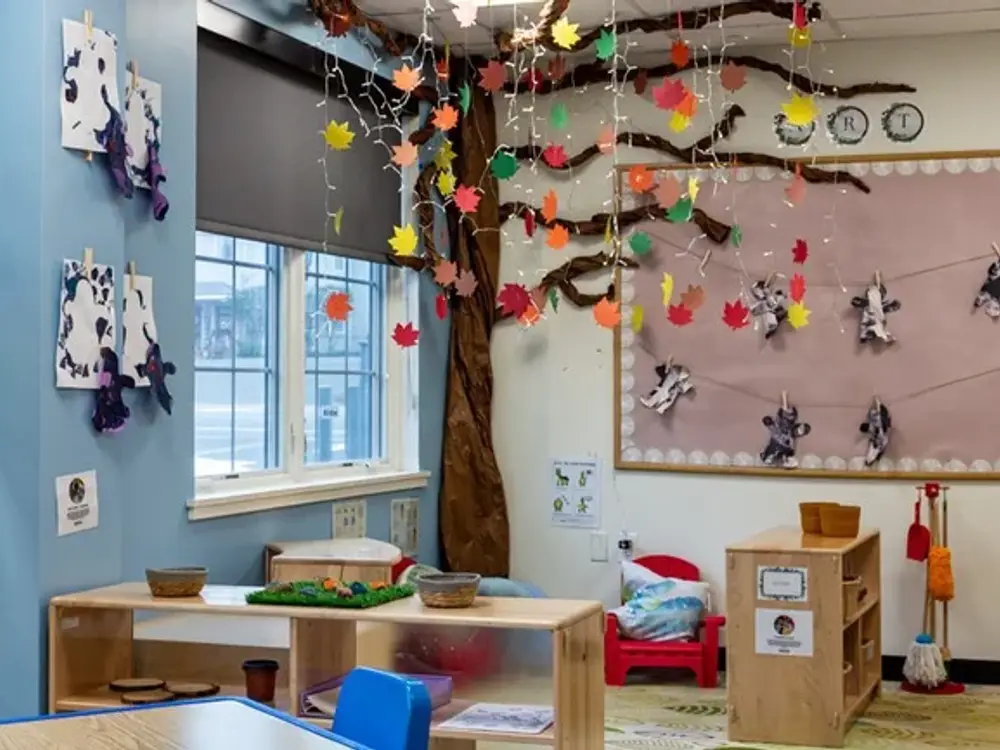
Ordered Steps Learning Center is a Reggio Emilia-inspired preschool and childcare center in Stamford, Connecticut, serving children aged 18 months to five.
The program follows a Reggio Emilia, play-based and academic approach.
Tuition and capacity
Tuition: not listed. Ordered Steps Learning Center LLC does not publish a fee schedule on its website. Programs in the area that publish full-time tuition have a median starting price of $1,967 a month.
Licensing and safety
Open the state record →Most violations are record-keeping, training or maintenance items, and nearly every program has some. Read what each one was and how fast it was fixed. Connecticut records each regulation cited at an inspection with the date it was closed. The state does not assign a risk level. The text shown is the regulation the program was cited under.
No Violations [-]
Regulation: -
Local Health Inspection [19a-79-2a(c)(8)]
Regulation: At least every two (2) years, the local health director shall make unannounced visits, inspections or investigations of the licensed child care center or group child care home.
Professional development [19a-79-4a(a)(2), (h)(1-2)]
Regulation: Documentation of professional development for each program staff who cares for the children, including new employee orientation and annual training for current program staff on the child care center or group child care home policies, plans and procedures. Program staff, including the director, shall complete health and safety training no later than three months after the date of hire. Written verification of ongoing training that is at least one percent of the total annual hours worked. As of A
Comprehensive background checks [19a-79-4a(b)]
Regulation: The operator shall ensure that all program staff have completed a comprehensive background check before they have unsupervised access to children. The operator shall provide to the Office of Early Childhood any information obtained concerning substantiated child abuse or neglect records or criminal convictions upon request. The operator shall obtain from each prospective employee, who is eighteen years of age or older, for a position that requires the provision of care to a child or involves uns
Lead Paint- testing, management plans [19a-79-7a(c)(6)(A-D)]
Regulation: If the child care center or group child care home is housed in any portion of a building that was constructed prior to 1978, the operator shall submit to the Office and maintain documentation on file at the child care center or group child care home of the following. Prior to use, all space used by staff, program staff, and children shall have undergone a comprehensive lead inspection by a lead consultant licensed by the Department of Public Health. Such lead inspection shall include testing of
Show all 47 violations on file
Documentation of Behavioral Management Techniques Discussed with Parents [19a-79-3a(b)(7)(B)]
Regulation: The operator shall document that parents have been informed of the techniques used to manage child behaviors in the facility prior to enrollment and reviewed as needed during the period of the child's enrollment.
Children's Enrollment information [19a-79-5a(a)(1)(A)-(C)]
Regulation: The operator of a child care center or group child care home is responsible for maintaining on the licensed premises a current record for each child enrolled. A copy of the record shall be available and provided upon request to the Office of Early Childhood, the child's parent(s) and the local health director. The record shall include enrollment information signed and dated by the parent(s) that shall include, but not be limited to: the child�s name, address, date of birth and date enrolled, th
Proper Refrigeration -41 degrees [19a-79-6a(a)(3)]
Regulation: There shall be proper refrigeration of no more than forty-one (41) degrees Fahrenheit for perishable foods in all child care centers and group child care homes and on field trips.
Authorized prescriber/parent permission [19a-79-9a(b)(3)(A-B)]
Regulation: Except for nonprescription topical medications, no medication shall be administered to a child without the written order of an authorized prescriber and the written permission of the child's parent(s) which shall be on file at the facility. Individual written medication administration records for each child shall be written in ink, reviewed prior to administering each dose of medication and kept on file at the facility for at least three years after the child is no longer attending the program.
Diapering [19a-79-10(e)(1-10)]
Regulation: The diapering area shall be an elevated sturdy table or counter equipped with a safety rail. Infants and toddlers shall be diapered at a diapering area used only for this purpose and located in the program area. Each diapering area shall have a non-porous surface and be kept in good repair. Diapering areas shall be washed and disinfected after each use. Disposable paper sheets shall be used and discarded immediately after each diapering. A covered washable lined waste receptacle shall be availab
Potentially hazardous substances, materials � labeled, inaccessible to children [19a-79-7a(e)(10)]
Regulation: Potentially hazardous substances and materials in the child care centers and group child care homes shall be stored in a labeled container identifying the exact contents and dilutions, used according to the manufacturer�s instructions and for the intended purpose, handled in a safe manner and inaccessible to children.
Outdoor space [19a-79-7a(h)(1-9)]
Regulation: There shall be access to a minimum of seventy-five (75) square feet per child of outdoor space for the number of children using the space at any one time. The outdoor area shall be fenced or protected for safety. Outdoor play equipment shall have a shock absorbing surface, under and around, that shall effectively cushion the fall of a child, except where the child is sitting or standing at ground level. The shock absorbing surface shall be maintained at a depth of at least eight inches, be free
Licensed premises-clean, good repair, hazard free-maintenance program [19a-79-7a(c)(2)]
Regulation: For programs serving children younger than school age, the building, equipment and furnishings shall be maintained in a good state of repair. A maintenance program shall be established that ensures that the interior, exterior and grounds of the building are maintained, kept clean and orderly, free from accumulations of refuse, dampness, stagnant water, dilapidated structures and other health and safety hazards.
Walls/ceilings/floors/rugs-clean, good repair [19a-79-7a(e)(5)]
Regulation: Walls, ceilings, floors and rugs shall be maintained in a state of good repair and be washable or easily cleanable. Rugs, if used, shall not present a tripping or slipping hazard.
Injury, Illness, Incident, Accident reports [19a-79-5a(a)(3)(A)]
Regulation: A written report shall be produced and maintained on the licensed premises, and for a period of not less than 2 years, documenting any injuries or accidents that result in an injury to a child, or illness of a child enrolled at the facility, an incident that is required to be reported to DCF. This report shall be available to the OEC upon request and a copy shall be provided to the parent no later than the next business day.
CO/NCAP Compliance Violation(s) [-]
Regulation: A Negotiated Corrective Action Plan or Consent Order is a voluntary agreement in which a provider/program agrees to take certain steps or make changes above and beyond the regulations in order to retain their license. The operator shall ensure compliance with the conditions.
Authorized prescriber/parent permission [19a-79-9a(b)(3)(A-B)]
Regulation: Except for nonprescription topical medications, no medication shall be administered to a child without the written order of an authorized prescriber and the written permission of the child's parent(s) which shall be on file at the facility. Individual written medication administration records for each child shall be written in ink, reviewed prior to administering each dose of medication and kept on file at the facility for at least three years after the child is no longer attending the program.
Unused/Expired meds-destroyed/returned [19a-79-9a(b)(5)(D)]
Regulation: All unused or expired medication, except for controlled substances, shall be returned to the parent(s) or disposed of if it is not picked up within one week following the termination of the order, in the presence of at least one witness. The facility shall keep a written record of the medications destroyed for three years which shall be signed by both parties.
Adequate sinks-handwashing-diapering/other use-food prep [19a-79-10(d)(1)(A-C)]
Regulation: In child care centers there shall be a sink with hot and cold running water designated for diaper changing and hand washing of program staff and children. This sink shall be located in the program space. Child care centers which have three program staff for a group of infants or toddlers may use an accessible diaper changing facility if it is immediately adjoining the program area. Separate sinks shall be available for purposes other than hand washing after diaper changing within child care cent
Ensuring the safety & health of children [19a-79-3a(a)]
Regulation: The operator of the child care center or group child care home shall be responsible for compliance with the requirements of the Regulations of Connecticut State Agencies and applicable endorsements in such a manner as to ensure the safety, health and development of the children while in the operator's care.
Authorized prescriber/parent permission [19a-79-9a(b)(3)(A-B)]
Regulation: Except for nonprescription topical medications, no medication shall be administered to a child without the written order of an authorized prescriber and the written permission of the child's parent(s) which shall be on file at the facility. Individual written medication administration records for each child shall be written in ink, reviewed prior to administering each dose of medication and kept on file at the facility for at least three years after the child is no longer attending the program.
Labeling and storage [19a-79-9a(b)(5)(A-B)]
Regulation: Medication shall be stored in the original child-resistant safety container and appropriately labeled. Medication shall be stored in a locked area or a locked container in a refrigerator in keeping with the label directions away from food and inaccessible to children. Only personnel authorized to administer medication may be provided with the means to access such medication. Controlled drugs shall be stored in accordance with state law.
Unused/Expired meds-destroyed/returned [19a-79-9a(b)(5)(D)]
Regulation: All unused or expired medication, except for controlled substances, shall be returned to the parent(s) or disposed of if it is not picked up within one week following the termination of the order, in the presence of at least one witness. The facility shall keep a written record of the medications destroyed for three years which shall be signed by both parties.
Individual care plan- signed by parents/staff [19a-79-5a(a)(2)(E)]
Regulation: An individual plan of care for any child with special health care needs or disabilities when it is necessary that special care be taken or provided while a child is in attendance shall be developed and implemented with the child's parent(s) and health care provider and updated, as necessary. The plan shall include appropriate care of the child to prevent and respond to a medical or other emergency and shall be signed by the parent and program staff responsible for the care of the child.
Adequate sinks-handwashing-diapering/other use-food prep [19a-79-10(d)(1)(A-C)]
Regulation: In child care centers there shall be a sink with hot and cold running water designated for diaper changing and hand washing of program staff and children. This sink shall be located in the program space. Child care centers which have three program staff for a group of infants or toddlers may use an accessible diaper changing facility if it is immediately adjoining the program area. Separate sinks shall be available for purposes other than hand washing after diaper changing within child care cent
Ratios- 1:4 (6wks-24mths), 1:5 (24-36mths) [19a-79-10(c)(2)]
Regulation: There shall be at least one program staff qualified under section 19a79-4a(e) of the Regulations of Connecticut State Agencies for every four children or fraction thereof who are under the age of two years in attendance and for every five children or fraction thereof who are two years old in attendance, indoors and outdoors.
Ratios- 1:4 (6wks-24mths), 1:5 (24-36mths) [19a-79-10(c)(2)]
Regulation: There shall be at least one program staff qualified under section 19a79-4a(e) of the Regulations of Connecticut State Agencies for every four children or fraction thereof who are under the age of two years in attendance and for every five children or fraction thereof who are two years old in attendance, indoors and outdoors.
Program space- adequate sq. ft. per child [19a-79-7a(f)(1)(A)]
Regulation: An operator of a child care center or group child care home operating in a facility first licensed after January 1, 1986 shall provide a minimum of thirty-five (35) square feet of total indoor usable program space per child. An operator of a child care center or group child care home operating in a facility first licensed before January 1, 1986 shall provide a minimum of thirty (30) square feet of total indoor usable program space per child.
Annual policy training for program staff [19a-79-3a(b)(6)]
Regulation: The operator shall assure annual training for all current program staff on the child care center or group child care home policies, plans and procedures.
Documentation of Behavioral Management Techniques Discussed with Parents [19a-79-3a(b)(7)(B)]
Regulation: The operator shall document that the techniques used to manage child behaviors in the facility have been discussed with the child's parent(s) prior to enrollment and reviewed as needed during the period of the child's enrollment.
Children's Enrollment information [19a-79-5a(a)(1)(A)-(C)]
Regulation: The operator of a child care center or group child care home is responsible for maintaining on the licensed premises a current record for each child enrolled. A copy of the record shall be available and provided upon request to the Office of Early Childhood, the child's parent(s) and the local health director. The record shall include enrollment information signed and dated by the parent(s) that shall include, but not be limited to: the child�s name, address, date of birth and date enrolled, th
Parent Permissions [19a-79-5a(a)(1)(D)(i-iv)]
Regulation: The operator of a child care center or group child care home is responsible for maintaining on the licensed premises a current record for each child enrolled. A copy of the record shall be available and provided upon request to the Office of Early Childhood, the child's parent(s) and the local health director. It shall include specific written permission forms signed by the parent(s) authorizing the operator to use the programs emergency policies which shall accompany the child on trips away fro
Proper Refrigeration -41 degrees [19a-79-6a(a)(3)]
Regulation: There shall be proper refrigeration of no more than forty-one (41) degrees Fahrenheit for perishable foods in all child care centers and group child care homes and on field trips.
Medication Trainings [19a-79-9a(b)(1)(A-F)-(2)(A-C)]
Regulation: Prior to the administration of any medication, the director(s), head teacher(s), program staff or group child care home provider(s) who are responsible for administering the medications shall first be trained by a pharmacist, physician, physician assistant, advanced practice registered nurse or registered nurse in the methods of administration of medications and shall receive written approval from the trainer which indicates that the trainee has successfully completed a training program as requi
Child Health Records [19a-79-5a(a)(2)(A)-(E)]
Regulation: The operator of a child care center or group child care home is responsible for maintaining on the licensed premises a current record for each child enrolled. A copy of the record shall be available and provided upon request to the Office of Early Childhood, the child's parent(s) and the local health director. It shall include a health record that shall include date of birth, a signed physical examination form including the child's date of birth, a statement about the child's general health and
Licensed premises-clean, good repair, hazard free-maintenance program [19a-79-7a(c)(2)]
Regulation: For programs serving children younger than school age, the building, equipment and furnishings shall be maintained in a good state of repair. A maintenance program shall be established that ensures that the interior, exterior and grounds of the building are maintained, kept clean and orderly, free from accumulations of refuse, dampness, stagnant water, dilapidated structures and other health and safety hazards.
Walls/ceilings/floors/rugs-clean, good repair [19a-79-7a(e)(5)]
Regulation: Walls, ceilings, floors and rugs shall be maintained in a state of good repair and be washable or easily cleanable. Rugs, if used, shall not present a tripping or slipping hazard.
Ratios- 1:4 (6wks-24mths), 1:5 (24-36mths) [19a-79-10(c)(2)]
Regulation: There shall be at least one program staff qualified under section 19a79-4a(e) of the Regulations of Connecticut State Agencies for every four children or fraction thereof who are under the age of two years in attendance and for every five children or fraction thereof who are two years old in attendance, indoors and outdoors.
No toys/objects less than 1 � ‶ diameter [19a-79-10(h)(2)]
Regulation: Toys and other objects with a diameter of less than one and one-quarter inches, objects with removable parts that have a diameter of less than one and one-quarter inches, balloons and Styrofoam objects shall not be accessible to children under three years of age unless such objects are part of a designated and directly supervised activity.
Ratios [19a-79-4a(d)(4)(A-B) and (d)(6)]
Regulation: Proper staff child ratios shall be maintained at all times, indoors and outdoors. There shall be at least one program staff for every ten children, or fraction thereof in attendance. When there is a mixed age group, the lower required ratio for the age of the youngest child shall prevail. During nap time, when all of the children in the group are sleeping, the overall staff child ratios shall be maintained on the licensed premises. At no time shall a group of children be left unsupervised.
Potentially hazardous substances, materials � labeled, inaccessible to children [19a-79-7a(e)(10)]
Regulation: Potentially hazardous substances and materials in the child care centers and group child care homes shall be stored in a labeled container identifying the exact contents and dilutions, used according to the manufacturer�s instructions and for the intended purpose, handled in a safe manner and inaccessible to children.
Authorized prescriber/parent permission [19a-79-9a(b)(3)(A-B)]
Regulation: Except for nonprescription topical medications, no medication shall be administered to a child without the written order of an authorized prescriber and the written permission of the child's parent(s) which shall be on file at the facility. Individual written medication administration records for each child shall be written in ink, reviewed prior to administering each dose of medication and kept on file at the facility for at least three years after the child is no longer attending the program.
Labeling and storage [19a-79-9a(b)(5)(A-B)]
Regulation: Medication shall be stored in the original child-resistant safety container and appropriately labeled. Medication shall be stored in a locked area or a locked container in a refrigerator in keeping with the label directions away from food and inaccessible to children. Only personnel authorized to administer medication may be provided with the means to access such medication. Controlled drugs shall be stored in accordance with state law.
Emergency medication inaccessible [19a-79-9a(b)(5)(C)]
Regulation: Equipment and medications prescribed to treat asthma, administer glucagon, control seizures, or as an emergent first line of defense medication against an allergic response or a diabetic reaction shall be stored in a safe manner, inaccessible to other children, to allow for quick access in an emergency.
Unused/Expired meds-destroyed/returned [19a-79-9a(b)(5)(D)]
Regulation: All unused or expired medication, except for controlled substances, shall be returned to the parent(s) or disposed of if it is not picked up within one week following the termination of the order, in the presence of at least one witness. The facility shall keep a written record of the medications destroyed for three years which shall be signed by both parties.
Individual care plan- signed by parents/staff [19a-79-5a(a)(2)(E)]
Regulation: An individual plan of care for any child with special health care needs or disabilities when it is necessary that special care be taken or provided while a child is in attendance shall be developed and implemented with the child's parent(s) and health care provider and updated, as necessary. The plan shall include appropriate care of the child to prevent and respond to a medical or other emergency and shall be signed by the parent and program staff responsible for the care of the child.
Adequate sinks-handwashing-diapering/other use-food prep [19a-79-10(d)(1)(A-C)]
Regulation: In child care centers there shall be a sink with hot and cold running water designated for diaper changing and hand washing of program staff and children. This sink shall be located in the program space. Child care centers which have three program staff for a group of infants or toddlers may use an accessible diaper changing facility if it is immediately adjoining the program area. Separate sinks shall be available for purposes other than hand washing after diaper changing within child care cent
What parents say
We are fortunate to have our two little ones attending Order Steps Learning Center for almost 2 years now, and we are genuinely grateful for Falasha, the owner, and her dedicated team of teachers. They consistently display a deep level of care and attentiveness towards the children, going above and beyond to support their growth and development in various areas such as social skills and academic progress. One notable…
SM Harris · 5/5 on Google · 2 years agoWe had an incredible experience with Ordered Steps. We moved to Stamford and were in need of daycare. From the moment we walked in we loved the atmosphere, and the owner, Falasha, made us feel right at home. They helped us through getting our daughter potty trained, and lots of other toddler milestones. They are patient and caring and I would choose them again in a heartbeat.
Susan Aloise · 5/5 on Google · 2 years agoI called this daycare to ask for proper registration run down , she was very snotty and rude definitely unprofessional I don’t recommend. She called my phone after speaking with her to say not to call back her phone and for me to use her website.
Maryuri Alvarado · 1/5 on Google · 2 years agoGetting there
110 Prospect St Ste 2, Stamford, CT 06901
Questions about Ordered Steps Learning Center LLC
Is Ordered Steps Learning Center LLC licensed?
Yes. Ordered Steps Learning Center LLC holds an active Child Care Center licence from Connecticut Office of Early Childhood (licence DCCC.70756), with a licensed capacity of 26 children. The state record was synced in September 2026.
Has Ordered Steps Learning Center LLC had any inspection violations?
Connecticut records 47 violations for Ordered Steps Learning Center LLC in the last three years, across 4 inspections on file. The median daycare center in the area has 12. Each one is listed above with the date it was corrected.
What ages does Ordered Steps Learning Center LLC take?
Ordered Steps Learning Center LLC is licensed to serve infant, toddler and preschool ages, and is open 7:30 am to 5:30 pm, Mon to Fri.
How much does Ordered Steps Learning Center LLC cost?
Ordered Steps Learning Center LLC does not publish tuition on its website. Ask for the full fee schedule on a tour, including registration, supply and late pick-up fees.