Edgewood Academy
Daycare center in Stamford, CT. 18 Edgewood Ave, Stamford, CT 06907
About the program
Edgewood Academy is a licensed daycare center in Stamford, Connecticut, on the state register since 2012. It is licensed for 28 children and serves infant, toddler and preschool ages.
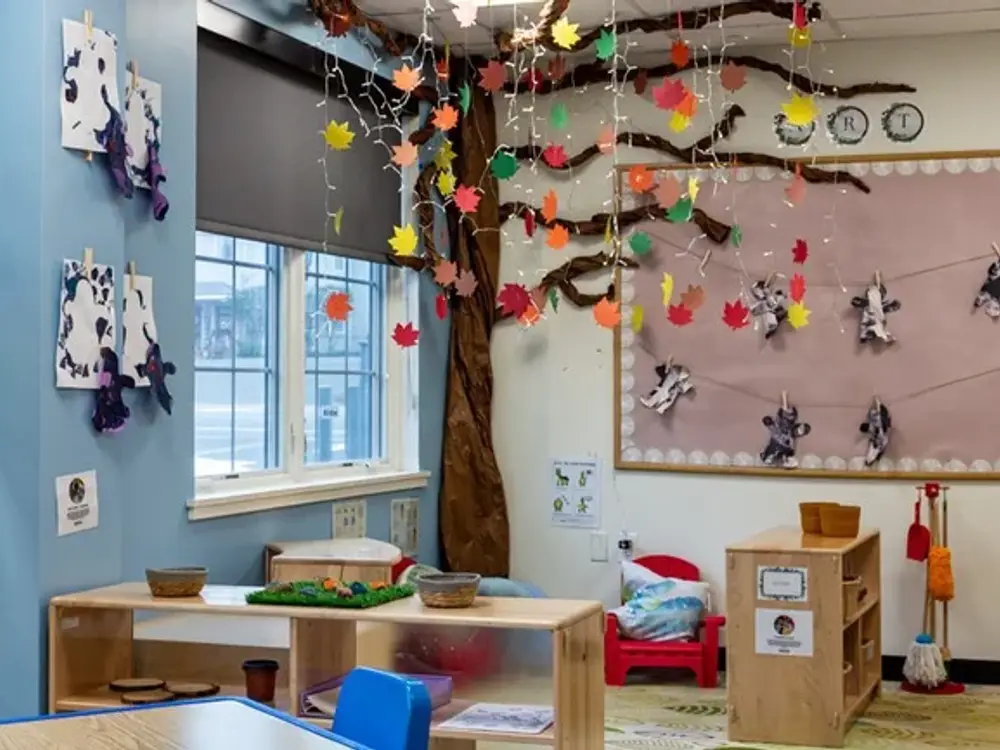
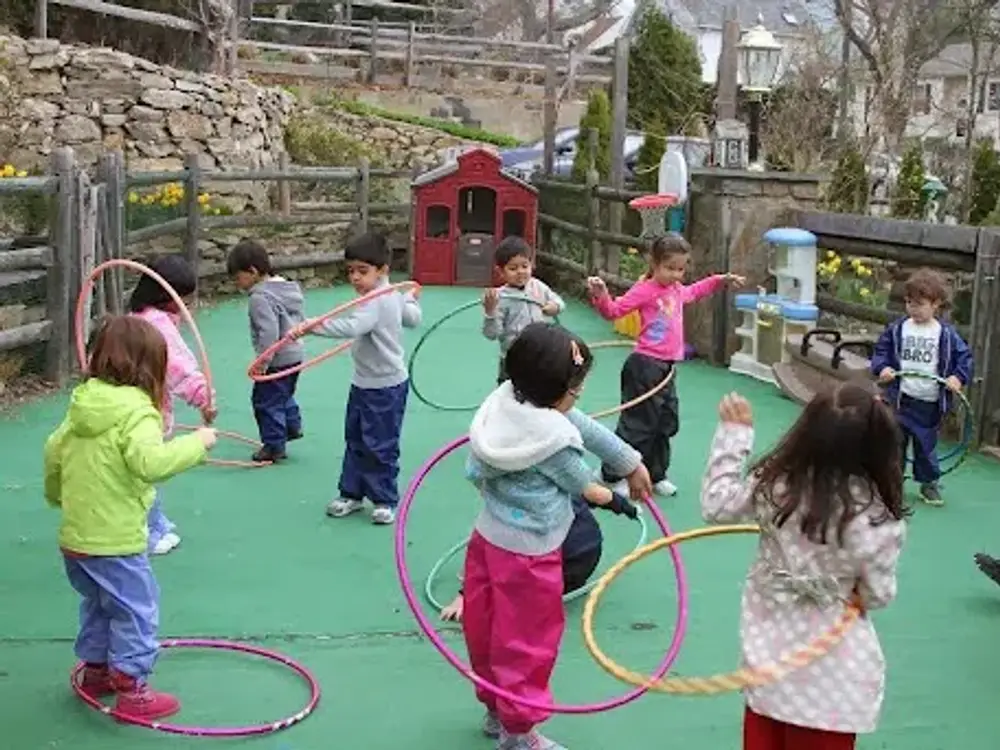
Edgewood Academy is a daycare center serving children from infants through age five in a garden setting.
Tuition and capacity
Tuition: not listed. Edgewood Academy does not publish a fee schedule on its website. Programs in the area that publish full-time tuition have a median starting price of $1,967 a month.
Licensing and safety
Open the state record →Most violations are record-keeping, training or maintenance items, and nearly every program has some. Read what each one was and how fast it was fixed. Connecticut records each regulation cited at an inspection with the date it was closed. The state does not assign a risk level. The text shown is the regulation the program was cited under.
Safe Sleep [19a-79-10(g)(1-8)]
Regulation: Infants under twelve months of age shall be placed in a supine (back) position for sleeping in a well-constructed, free standing crib or other piece of equipment designed for infant sleeping and appropriate for the particular child. A well-constructed, free standing crib or other piece of equipment shall be used designed for infant sleeping and appropriate for the particular child, with a snug fitting mattress covered by a tightly-fitted sheet. Infants under twelve months of age shall be placed
2.8 yr olds enrolled in preschool-authorization [19a-79-3a(l)]
Regulation: A child care center or group child care home with a preschool endorsement may deem a child who is thirty-two to thirty-six months of age, inclusive, to be three years of age for purposes of enrolling such child in a preschool program provided such child care center or group child care home receives written authorization from such child�s parent and the director to so enroll such child in the preschool program. The written authorization shall be kept on file at the child care center or group chil
Local Health Inspection [19a-79-2a(c)(8)]
Regulation: At least every two (2) years, the local health director shall make unannounced visits, inspections or investigations of the licensed child care center or group child care home.
Professional development [19a-79-4a(a)(2), (h)(1-2)]
Regulation: Documentation of professional development for each program staff who cares for the children, including new employee orientation and annual training for current program staff on the child care center or group child care home policies, plans and procedures. Program staff, including the director, shall complete health and safety training no later than three months after the date of hire. Written verification of ongoing training that is at least one percent of the total annual hours worked. As of A
Comprehensive background checks [19a-79-4a(b)]
Regulation: The operator shall ensure that all program staff have completed a comprehensive background check before they have unsupervised access to children. The operator shall provide to the Office of Early Childhood any information obtained concerning substantiated child abuse or neglect records or criminal convictions upon request. The operator shall obtain from each prospective employee, who is eighteen years of age or older, for a position that requires the provision of care to a child or involves uns
Show all 50 violations on file
CPR Certified program staff [19a-79-4a(f)(1)]
Regulation: At all times the child care center is in operation there shall be present at least one program staff member who has current certification in CPR appropriate for all of the children served at the child care center or group child care home. The certification shall be based on a hands-on demonstration of the individual�s ability to provide cardiopulmonary resuscitation. Such program staff shall respond to all medical emergencies. Written verification of such training shall be kept on file.
Water supply- water testing [19a-79-7a(c)(5)(A-C)]
Regulation: Water supply, food service and sewage disposal facilities shall be adequate, safe and in compliance with all applicable sections of the Regulations of Connecticut State Agencies. Water from at least one drinking fountain or drinking, beverage and food preparation sink, and from two such sources if the facility has more than one, shall be tested every two years for lead content. The water sample shall have been standing in plumbing pipes at least six hours and the results shall be submitted to th
First Aid Certified program staff [19a-79-4a(f)(2)]
Regulation: At all times the child care center or group child care home is in operation, there shall be present at least one program staff member who holds current certification in first aid based on a first aid course appropriate for all of the children served at the child care center or group child care home. Such certification shall be based on a hands-on demonstration of the individual�s ability to provide first aid. Such program staff member shall respond to all situations requiring first aid. Written
No Violations [-]
Regulation: -
No Violations [-]
Regulation: -
Ratios- 1:4 (6wks-24mths), 1:5 (24-36mths) [19a-79-10(c)(2)]
Regulation: There shall be at least one program staff qualified under section 19a79-4a(e) of the Regulations of Connecticut State Agencies for every four children or fraction thereof who are under the age of two years in attendance and for every five children or fraction thereof who are two years old in attendance, indoors and outdoors.
Group size- max 8 (6wks-24mths), max 10 (24-36mths) [19a-79-10(c)(3)]
Regulation: The group size shall not exceed eight for children that are under the age of two years and shall not exceed ten for children that are two years old, indoors and outdoors.
Physical barriers- indoors/outdoors [19a-79-10(c)(4)]
Regulation: There shall be a physical barrier separating each group of children under the age of three, indoors and outdoors.
Group size- max 8 (6wks-24mths), max 10 (24-36mths) [19a-79-10(c)(3)]
Regulation: The group size shall not exceed eight for children that are under the age of two years and shall not exceed ten for children that are two years old, indoors and outdoors.
Physical barriers- indoors/outdoors [19a-79-10(c)(4)]
Regulation: There shall be a physical barrier separating each group of children under the age of three, indoors and outdoors.
No Violations [-]
Regulation: -
Feeding [19a-79-10(j)-(k)(1-5)]
Regulation: Infants shall be removed from their cribs and held for all bottle feedings. They may be placed in chairs for all other feedings. Infants and toddlers shall be removed from their cribs or playpens at other intervals during the day for individual cuddlings and for verbal communication. They shall be allowed to crawl and toddle as age and development permit. Each infant shall be placed in a prone (front) position part of the time when awake. When food and liquids are served a written statement spec
Safe Sleep [19a-79-10(g)(1-8)]
Regulation: Infants under twelve months of age shall be placed in a supine (back) position for sleeping in a well-constructed, free standing crib or other piece of equipment designed for infant sleeping and appropriate for the particular child. A well-constructed, free standing crib or other piece of equipment shall be used designed for infant sleeping and appropriate for the particular child, with a snug fitting mattress covered by a tightly-fitted sheet. Infants under twelve months of age shall be placed
Group size- max 8 (6wks-24mths), max 10 (24-36mths) [19a-79-10(c)(3)]
Regulation: The group size shall not exceed eight for children that are under the age of two years and shall not exceed ten for children that are two years old, indoors and outdoors.
Physical barriers- indoors/outdoors [19a-79-10(c)(4)]
Regulation: There shall be a physical barrier separating each group of children under the age of three, indoors and outdoors.
Daily Attendance Records: Children/Staff [19a-79-3a(d)(1)]
Regulation: The operator shall implement and annually review specific written policies, plans and procedures that include daily attendance records for both children and staff showing the specific times of arrival and departure. The operator shall notify the parent(s), staff and the Office of Early Childhood within five (5) days of changes in these policies, plans and procedures.
Individual Care Plan (Signed by Parent/Staff) [19a-79-5a(a)(2)(E)]
Regulation: The operator of a child care center or group child care home is responsible for maintaining on the licensed premises a current record for each child enrolled. A copy of the record shall be available and provided upon request to the Office of Early Childhood, the child's parent(s) and the local health director. It shall include an individual plan of care for any child with special health care needs or disabilities, developed with the child's parent(s) and health care provider and updated, as nece
Nonprescription Topical Medications: Administration/Parent Permission/MAR [19a-79-9a(a)(2)]
Regulation: The written permission of the parent(s) shall be required prior to the administration of the nonprescription topical medication and a medication administration record shall be written in ink and kept on file at the facility for each child administered a nonprescription topical medication.
Nonprescription Topical Medications: Labeling/Storage [19a-79-9a(a)(3)]
Regulation: Nonprescription Topical Medications shall be stored in the original container and shall be appropriately labeled and shall be stored away from food and inaccessible to children. Any unused portion of the medication shall be returned to the parent(s).
Oral/Topical/Inhalant/Injectable Medications: Authorized Prescriber/Parent Permission/MAR [19a-79-9a(b)(3) and/or 19a-79-9a(b)(4)]
Regulation: Except for nonprescription topical medications, no medication shall be administered to a child without the written order of an authorized prescriber and the written permission of the child's parent(s) which shall be on file at the facility. Individual written medication administration records for each child shall be written in ink, reviewed prior to administering each dose of medication and kept on file at the facility for at least two (2) years after the child is no longer attending the program
Staff Health Records [19a-79-4a(a)(1) and/or 19a-79-4a(a)(2)]
Regulation: A file shall be kept on the licensed premises for each employee of the child care center or group child care home which shall include an acceptable medical statement and a written report of a negative tuberculin test.
Bottles Individually Identified w/ Child's Name [19a-79-10(k)(5)]
Regulation: Each child's bottle shall be individually identified with the child's name.
Oral/Topical/Inhalant/Injectable Medications: Labeling/Storage [19a-79-9a(b)(5)]
Regulation: Medication shall be stored in the original child-resistant safety container and appropriately labeled. Medication shall be stored in a locked area or a locked container in a refrigerator in keeping with the label directions away from food and inaccessible to children. Controlled drugs shall be stored in accordance with state law. Equipment and medications prescribed to treat asthma, administer glucagons, or as an emergent first line of defense medication against an allergic response shall be s
Current Fire Marshal Certificate [19a-79-3a(e)(2)]
Regulation: The operator shall post the current fire marshal certificate in a conspicuous place, accessible to the public.
Local Health Inspection [19a-79-2a(c)(7)]
Regulation: At least every two (2) years, the local health director shall make unannounced visits, inspections or investigations of the licensed child care center or group child care home.
Policies [19a-79-3a(d)(2) thru (8) &/or19a-79-7a(d)(11)(A)]
Regulation: The operator shall implement and annually review specific written policies, plans and procedures that include, but not necessarily be limited to discipline, when a child is not picked up as planned, emergencies, supervision of children, general operating policies, and personnel policies. The operator shall notify the parent(s), staff and the Office of Early Childhood within five (5) days of changes in these policies, plans and procedures. Where toilets and sinks are shared by children and adults
Daily Attendance Records: Children/Staff [19a-79-3a(d)(1)]
Regulation: The operator shall implement and annually review specific written policies, plans and procedures that include daily attendance records for both children and staff showing the specific times of arrival and departure. The operator shall notify the parent(s), staff and the Office of Early Childhood within five (5) days of changes in these policies, plans and procedures.
Individual Care Plan (Signed by Parent/Staff) [19a-79-5a(a)(2)(E)]
Regulation: The operator of a child care center or group child care home is responsible for maintaining on the licensed premises a current record for each child enrolled. A copy of the record shall be available and provided upon request to the Office of Early Childhood, the child's parent(s) and the local health director. It shall include an individual plan of care for any child with special health care needs or disabilities, developed with the child's parent(s) and health care provider and updated, as nece
Nonprescription Topical Medications: Administration/Parent Permission/MAR [19a-79-9a(a)(2)]
Regulation: The written permission of the parent(s) shall be required prior to the administration of the nonprescription topical medication and a medication administration record shall be written in ink and kept on file at the facility for each child administered a nonprescription topical medication.
Oral/Topical/Inhalant/Injectable Medications: Authorized Prescriber/Parent Permission/MAR [19a-79-9a(b)(3) and/or 19a-79-9a(b)(4)]
Regulation: Except for nonprescription topical medications, no medication shall be administered to a child without the written order of an authorized prescriber and the written permission of the child's parent(s) which shall be on file at the facility. Individual written medication administration records for each child shall be written in ink, reviewed prior to administering each dose of medication and kept on file at the facility for at least two (2) years after the child is no longer attending the program
Local Health Inspection [19a-79-2a(c)(7)]
Regulation: At least every two (2) years, the local health director shall make unannounced visits, inspections or investigations of the licensed child care center or group child care home.
Documentation of Behavioral Management Techniques Discussed with Parents [19a-79-3a(b)(8)(B)]
Regulation: The operator shall document that the techniques used to manage child behaviors in the facility have been discussed with the child's parent(s) prior to enrollment and reviewed as needed during the period of the child's enrollment.
Staff Health Records [19a-79-4a(a)(1) and/or 19a-79-4a(a)(2)]
Regulation: A file shall be kept on the licensed premises for each employee of the child care center or group child care home which shall include an acceptable medical statement and a written report of a negative tuberculin test.
Professional Development [19a-79-4a(a)(3) and/or 19a-79-4a(g)]
Regulation: A file shall be kept on the licensed premises for each employee of the child care center or group child care home which shall include documentation of professional development for each program staff person who cares for the children, including new employee orientation and annual training for current staff on programs policies, plans and procedures. Professional development for program staff shall be required for one (1) per cent of the total annual hours worked. The operator of the child c
Consultant Agreements/Contracts [19a-79-4a(h)(1) and/or 19a-79-4a(h)(2)]
Regulation: A written plan for consultation services shall be developed, signed annually by the consultant and implemented. These services shall include an early childhood educational consultant, a health consultant, a dentist or dental hygienist consultant, a social service consultant, and a registered dietitian consultant for those programs that serve meals. Consultative services shall include annual review of written policies, plans and procedures, annual review of education programs, availability by tel
Enrollment Information [19a-79-5a(a)(1)(A) through (C)]
Regulation: The operator of a child care center or group child care home is responsible for maintaining on the licensed premises a current record for each child enrolled. A copy of the record shall be available and provided upon request to the Office of Early Childhood, the child's parent(s) and the local health director. The record shall include enrollment information and permission forms signed and dated by the parent(s).
Emergency Medical Permission [19a-79-5a(a)(1)(D)(i)]
Regulation: The operator of a child care center or group child care home is responsible for maintaining on the licensed premises a current record for each child enrolled. A copy of the record shall be available and provided upon request to the Office of Early Childhood, the child's parent(s) and the local health director. It shall include specific written permission forms signed by the parent(s) authorizing the operator to use the programs emergency policies which shall accompany the child on trips
Logs/Visits Documented [19a-79-4a(h)(2)(G)]
Regulation: A written plan for consultation services shall be developed, signed annually by the consultant and implemented. Consultative services shall include documenting the activities and observations in a consultation log that is kept on file at the facility for two years.
Authorized Released Permission [19a-79-5a(a)(1)(D)(ii)]
Regulation: The operator of a child care center or group child care home is responsible for maintaining on the licensed premises a current record for each child enrolled. A copy of the record shall be available and provided upon request to the Office of Early Childhood, the child's parent(s) and the local health director. It shall include specific written permission forms signed by the parent(s) authorizing one responsible person other than the parent(s) who can remove the child from the child care center o
Oral/Topical/Inhalant/Injectable Medications: Authorized Prescriber/Parent Permission/MAR [19a-79-9a(b)(3) and/or 19a-79-9a(b)(4)]
Regulation: Except for nonprescription topical medications, no medication shall be administered to a child without the written order of an authorized prescriber and the written permission of the child's parent(s) which shall be on file at the facility. Individual written medication administration records for each child shall be written in ink, reviewed prior to administering each dose of medication and kept on file at the facility for at least two (2) years after the child is no longer attending the program
Oral/Topical/Inhalant/Injectable Medications: Unused/Expired Meds Returned/Disposed [19a-79-9a(b)(5)(D) and/or 19a-79-9a(b)(5)(E)]
Regulation: All unused or expired medication shall be returned to the parent(s) or disposed of if it is not picked up within one (1) week following the termination of the order, in the presence of at least one witness. The facility shall keep a written record of the medications destroyed which shall be signed by both parties. The facility shall require the parent(s) of a child who has a prescription for an automatic prefilled cartridge injector, or similar automatic injectable equipment used to treat an all
Enrollment Information [19a-79-5a(a)(1)(A) through (C)]
Regulation: The operator of a child care center or group child care home is responsible for maintaining on the licensed premises a current record for each child enrolled. A copy of the record shall be available and provided upon request to the Office of Early Childhood, the child's parent(s) and the local health director. The record shall include enrollment information and permission forms signed and dated by the parent(s).
Individual Care Plan (Signed by Parent/Staff) [19a-79-5a(a)(2)(E)]
Regulation: The operator of a child care center or group child care home is responsible for maintaining on the licensed premises a current record for each child enrolled. A copy of the record shall be available and provided upon request to the Office of Early Childhood, the child's parent(s) and the local health director. It shall include an individual plan of care for any child with special health care needs or disabilities, developed with the child's parent(s) and health care provider and updated, as nece
Lead Water Test/Bottled Water [19a-79-7a(a) and/or 19a-79-7a(c)(3)]
Regulation: Water supply, food service and sewage disposal facilities shall be in compliance with all applicable sections of the Public Health Code. All water supplies shall be tested every two (2) years for lead content and the results submitted to the local and state health departments. Whenever water is obtained from other than a Department of Public Health-approved public water supply, it shall be of a safe and sanitary quality and tested every two (2) years for bacterial and chemical quality and the re
Nonprescription Topical Medications: Administration/Parent Permission/MAR [19a-79-9a(a)(2)]
Regulation: The written permission of the parent(s) shall be required prior to the administration of the nonprescription topical medication and a medication administration record shall be written in ink and kept on file at the facility for each child administered a nonprescription topical medication.
What parents say
Edgewood Academy is an exceptional childcare center. As a pediatric speech therapist, I'm consistently impressed by their phenomenal providers who are deeply invested in children's development. It's a friendly, welcoming, and linguistically rich environment that fosters learning, growth, and development through amazing, multisensory programs. Ms. B and Ms. Kristin are especially warm, supportive, and collaborative. I…
Sagine Joassin · 5/5 on Google · a year agoThe Edgewood Academy is the perfect setting for anyone who wants a friendly and loving environment for their kids. My son attended for two years and thrived. He blossomed into an empathetic boy who loves to play with other kids and is gentle with babies. Prior to joining the Academy, he was not as social and had difficulty expressing emotions. The children are exposed to a nature setting where they get to see fruit…
Nina Ruiz · 5/5 on Google · 3 years agoOur son has been in Edgewood Academy for almost a year and since the very beginning we’ve been very pleased with the level of attention and care he receives. Yekaterina and her team do an amazing job of creating a warm & safe, as well as educational environment. This is not your run-of-the-mill daycare provider, who will leave your child in front of a TV or even to play with toys alone and mindlessly all day.…
Irina Morgunova · 5/5 on Google · 9 years agoFrom day 1 my daughter has loved her time at Edgewood Academy. The location is quiet and private, there is plenty of outdoor space, the caretakers are loving and kind, and the activities for the kids are really fun. Edgewood even has events on weekends for all families to meet. I would recommend Edgewood to friends and family.
Lindsey Cohen · 5/5 on Google · 3 years agoGetting there
18 Edgewood Ave, Stamford, CT 06907
Questions about Edgewood Academy
Is Edgewood Academy licensed?
Yes. Edgewood Academy holds an active Child Care Center licence from Connecticut Office of Early Childhood (licence DCCC.70061), with a licensed capacity of 28 children. The state record was synced in September 2026.
Has Edgewood Academy had any inspection violations?
Connecticut records 29 violations for Edgewood Academy in the last three years, across 8 inspections on file. The median daycare center in the area has 12. Each one is listed above with the date it was corrected.
What ages does Edgewood Academy take?
Edgewood Academy is licensed to serve infant, toddler and preschool ages, and is open 7 am to 6 pm, Mon to Fri.
How much does Edgewood Academy cost?
Edgewood Academy does not publish tuition on its website. Ask for the full fee schedule on a tour, including registration, supply and late pick-up fees.