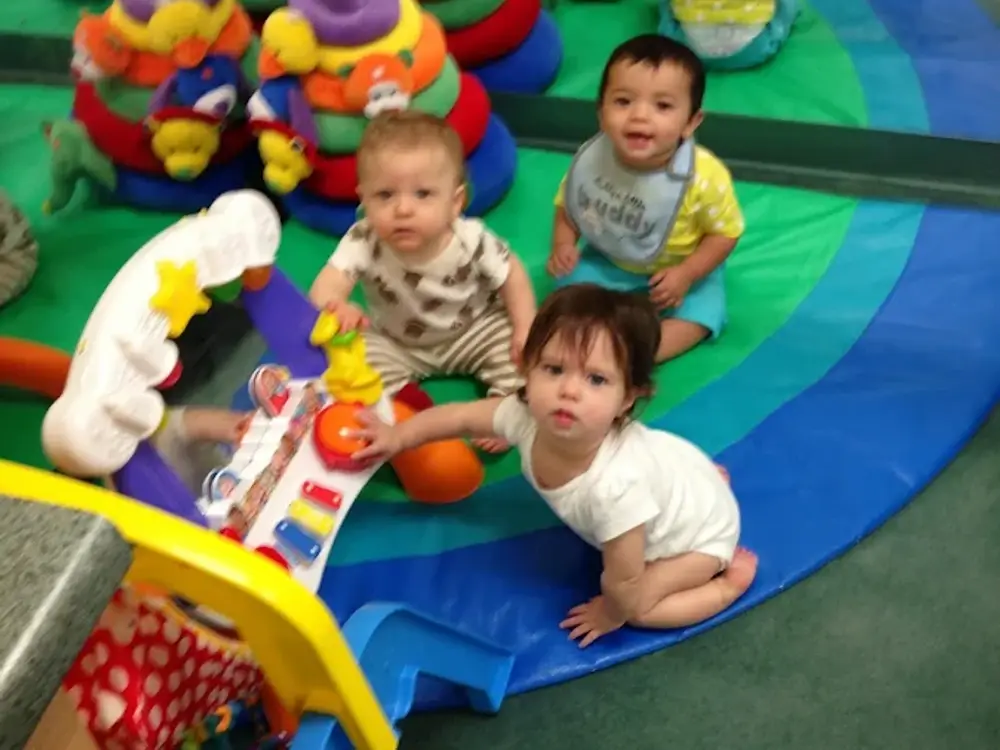
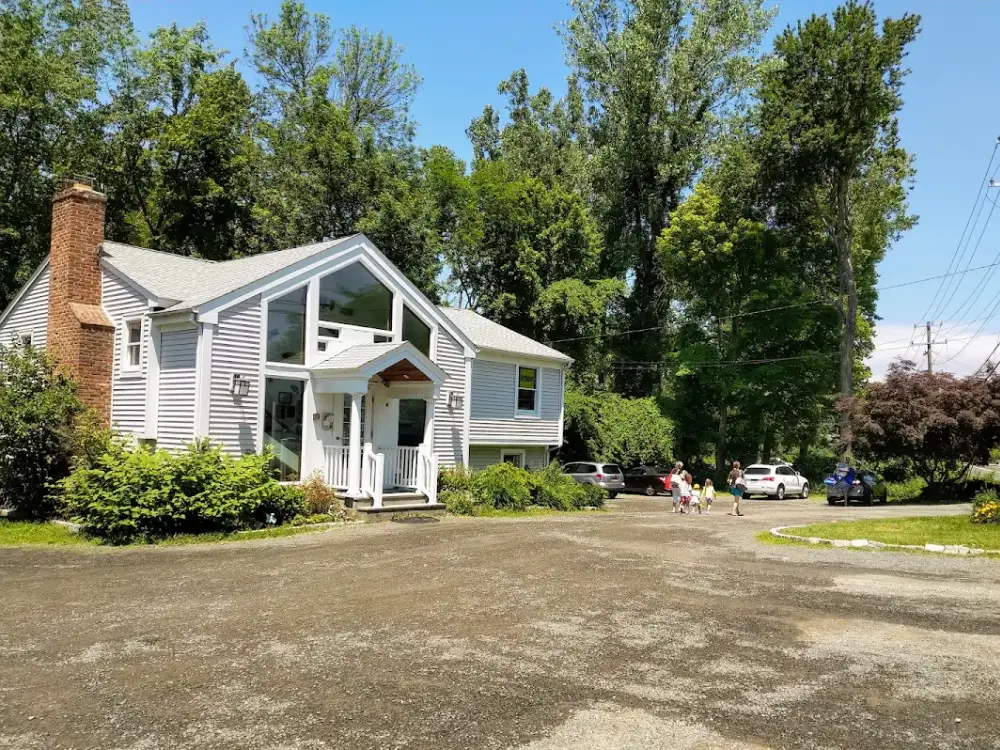
Ridgefield KinderCare
Daycare center in Ridgefield, CT. 35 Copps Hill Rd, Ridgefield, CT 06877
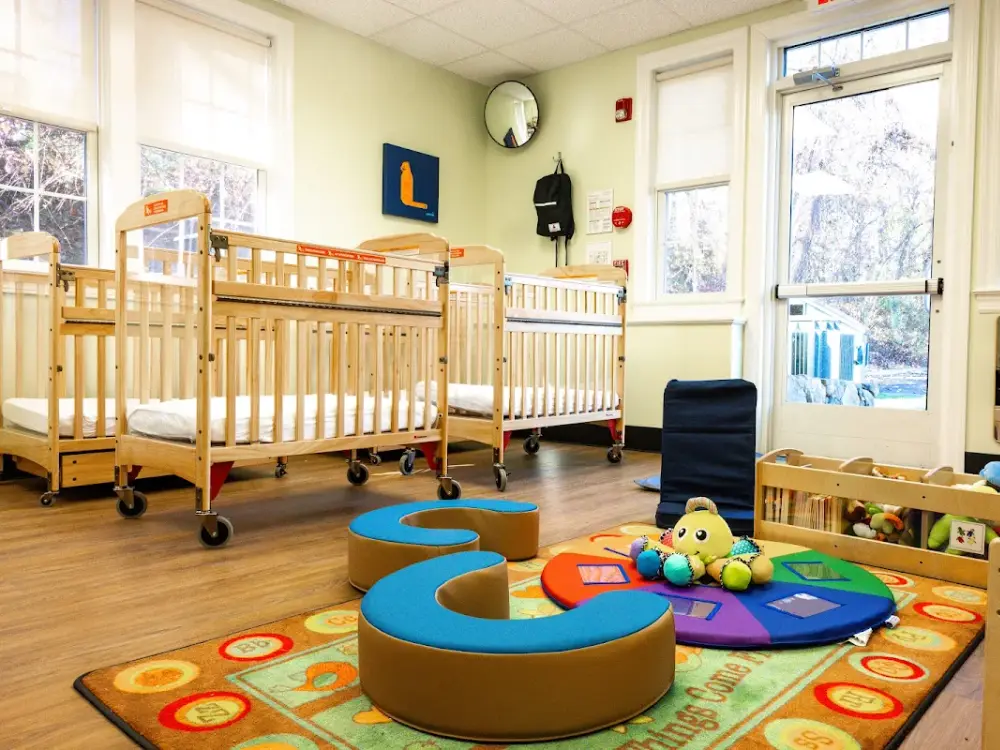
About the program
Ridgefield KinderCare is a licensed daycare center in Ridgefield, Connecticut, on the state register since 2023. It is licensed for 112 children and serves infant, toddler and preschool ages.
Tuition and capacity
Tuition: not listed. Ridgefield KinderCare does not publish a fee schedule. Programs in the area that publish full-time tuition have a median starting price of $1,967 a month.
Licensing and safety
Open the state record →Most violations are record-keeping, training or maintenance items, and nearly every program has some. Read what each one was and how fast it was fixed. Connecticut records each regulation cited at an inspection with the date it was closed. The state does not assign a risk level. The text shown is the regulation the program was cited under.
Medication Trainings [19a-79-9a(b)(1)(A-F)-(2)(A-C)]
Regulation: Prior to the administration of any medication, the director(s), head teacher(s), program staff or group child care home provider(s) who are responsible for administering the medications shall first be trained by a pharmacist, physician, physician assistant, advanced practice registered nurse or registered nurse in the methods of administration of medications and shall receive written approval from the trainer which indicates that the trainee has successfully completed a training program as requi
Labeling and storage [19a-79-9a(b)(5)(A-B)]
Regulation: Medication shall be stored in the original child-resistant safety container and appropriately labeled. Medication shall be stored in a locked area or a locked container in a refrigerator in keeping with the label directions away from food and inaccessible to children. Only personnel authorized to administer medication may be provided with the means to access such medication. Controlled drugs shall be stored in accordance with state law.
Auto-injector/inhalant equipment [19a-79-9a(b)(5)(E)]
Regulation: The facility shall require the parent(s) of a child who has a prescription for a premeasured, commercially prepared auto-injector used to treat an allergic reaction or injectable equipment used to administer glucagon or other injectable medication or rectal medication or inhalant medication to treat asthma, to provide the injector or equipment labeled with the information from the prescriber upon enrollment and attendance of such child at the facility, and replace such medication and equipment
Feeding [19a-79-10(j)-(k)(1-5)]
Regulation: Infants shall be removed from their cribs and held for all bottle feedings. They may be placed in chairs for all other feedings. Infants and toddlers shall be removed from their cribs or playpens at other intervals during the day for individual cuddlings and for verbal communication. They shall be allowed to crawl and toddle as age and development permit. Each infant shall be placed in a prone (front) position part of the time when awake. When food and liquids are served a written statement spec
Local Health Inspection [19a-79-2a(c)(8)]
Regulation: At least every two (2) years, the local health director shall make unannounced visits, inspections or investigations of the licensed child care center or group child care home.
Show all 76 violations on file
Emergency medication inaccessible [19a-79-9a(b)(5)(C)]
Regulation: Equipment and medications prescribed to treat asthma, administer glucagon, control seizures, or as an emergent first line of defense medication against an allergic response or a diabetic reaction shall be stored in a safe manner, inaccessible to other children, to allow for quick access in an emergency.
Overall management of program [19a-79-3a(b)]
Regulation: The operator shall be responsible for the overall management and operation of the child care center or group child care home in accordance with applicable federal, state and local laws and regulations.
Postings [19a-79-3a(d)6)(C), (e)(1-6), 7a(e)(17), 10(g)(8)]
Regulation: The operator shall post the following items in a conspicuous place, accessible to the public: the license, the OEC complaint procedure, menus, No Smoking signs, the plan for administrative oversight, the radon test, the OEC Inspection report (posted or available), the safe sleep policy and the OEC Developmental Milestones document.
Professional development [19a-79-4a(a)(2), (h)(1-2)]
Regulation: Documentation of professional development for each program staff who cares for the children, including new employee orientation and annual training for current program staff on the child care center or group child care home policies, plans and procedures. Program staff, including the director, shall complete health and safety training no later than three months after the date of hire. Written verification of ongoing training that is at least one percent of the total annual hours worked. As of A
Comprehensive background checks [19a-79-4a(b)]
Regulation: The operator shall ensure that all program staff have completed a comprehensive background check before they have unsupervised access to children. The operator shall provide to the Office of Early Childhood any information obtained concerning substantiated child abuse or neglect records or criminal convictions upon request. The operator shall obtain from each prospective employee, who is eighteen years of age or older, for a position that requires the provision of care to a child or involves uns
Ensuring the safety & health of children [19a-79-3a(a)]
Regulation: The operator of the child care center or group child care home shall be responsible for compliance with the requirements of the Regulations of Connecticut State Agencies and applicable endorsements in such a manner as to ensure the safety, health and development of the children while in the operator's care.
Child Health Records [19a-79-5a(a)(2)(A)-(E)]
Regulation: The operator of a child care center or group child care home is responsible for maintaining on the licensed premises a current record for each child enrolled. A copy of the record shall be available and provided upon request to the Office of Early Childhood, the child's parent(s) and the local health director. It shall include a health record that shall include date of birth, a signed physical examination form including the child's date of birth, a statement about the child's general health and
Policies- complete, implemented [19a-79-3a(d)(2)-(7)]
Regulation: The operator shall implement and annually review specific written policies, plans and procedures that include, but not necessarily be limited to discipline, when a child is not picked up as planned, multi-hazard and medical emergencies, supervision of children, general operating policies, administrative oversight and personnel policies. The operator shall notify the parent(s), staff and the Office of Early Childhood within five (5) days of changes in these policies, plans and procedures.
Annual policy training for program staff [19a-79-3a(b)(6)]
Regulation: The operator shall assure annual training for all current program staff on the child care center or group child care home policies, plans and procedures.
Designated Director [19a-79-4a(e)(1)]
Regulation: The child care center or group child care home shall maintain documentation on site that there is a designated director who is twenty years of age or older. Any director hired or newly designated shall have not later than one year of being hired/ designated, at least three credits in the administration of early childhood education programs or educational administration from a regionally accredited higher education institution.
Children's Enrollment information [19a-79-5a(a)(1)(A)-(C)]
Regulation: The operator of a child care center or group child care home is responsible for maintaining on the licensed premises a current record for each child enrolled. A copy of the record shall be available and provided upon request to the Office of Early Childhood, the child's parent(s) and the local health director. The record shall include enrollment information signed and dated by the parent(s) that shall include, but not be limited to: the child’s name, address, date of birth and date enrolled, th
Licensed premises-clean, good repair, hazard free-maintenance program [19a-79-7a(c)(2)]
Regulation: For programs serving children younger than school age, the building, equipment and furnishings shall be maintained in a good state of repair. A maintenance program shall be established that ensures that the interior, exterior and grounds of the building are maintained, kept clean and orderly, free from accumulations of refuse, dampness, stagnant water, dilapidated structures and other health and safety hazards.
Parent Permissions [19a-79-5a(a)(1)(D)(i-iv)]
Regulation: The operator of a child care center or group child care home is responsible for maintaining on the licensed premises a current record for each child enrolled. A copy of the record shall be available and provided upon request to the Office of Early Childhood, the child's parent(s) and the local health director. It shall include specific written permission forms signed by the parent(s) authorizing the operator to use the programs emergency policies which shall accompany the child on trips away fro
Water supply- water testing [19a-79-7a(c)(5)(A-C)]
Regulation: Water supply, food service and sewage disposal facilities shall be adequate, safe and in compliance with all applicable sections of the Regulations of Connecticut State Agencies. Water from at least one drinking fountain or drinking, beverage and food preparation sink, and from two such sources if the facility has more than one, shall be tested every two years for lead content. The water sample shall have been standing in plumbing pipes at least six hours and the results shall be submitted to th
Consultants [19a-79-4a(i)(1-2)(H), (F)]
Regulation: An education consultant shall be available to the operator and program staff for advice and support regarding the educational content and practice of the program. A person needs to apply for approval to be an education consultant. Program staff shall not serve as education consultants for programs in which they provide direct care or direct program supervision in a non-consultative role; or in a program with the same operator as a program in which they provide direct care or direct program super
Outdoor space [19a-79-7a(h)(1-9)]
Regulation: There shall be access to a minimum of seventy-five (75) square feet per child of outdoor space for the number of children using the space at any one time. The outdoor area shall be fenced or protected for safety. Outdoor play equipment shall have a shock absorbing surface, under and around, that shall effectively cushion the fall of a child, except where the child is sitting or standing at ground level. The shock absorbing surface shall be maintained at a depth of at least eight inches, be free
Walls/ceilings/floors/rugs-clean, good repair [19a-79-7a(e)(5)]
Regulation: Walls, ceilings, floors and rugs shall be maintained in a state of good repair and be washable or easily cleanable. Rugs, if used, shall not present a tripping or slipping hazard.
Individual care plan- signed by parents/staff [19a-79-5a(a)(2)(E)]
Regulation: An individual plan of care for any child with special health care needs or disabilities when it is necessary that special care be taken or provided while a child is in attendance shall be developed and implemented with the child's parent(s) and health care provider and updated, as necessary. The plan shall include appropriate care of the child to prevent and respond to a medical or other emergency and shall be signed by the parent and program staff responsible for the care of the child.
Immunization records [19a-79-5a(2)(C)
Regulation: The operator of a child care center or group child care home is responsible for maintaining on the licensed premises a current record for each child enrolled. A copy of the record shall be available and provided upon request to the Office of Early Childhood, the child's parent(s) and the local health director. It shall include a health record that shall include date of birth, a physical examination form, an immunization record, and information regarding disabilities or special health care needs.
021a-Past Employment History [19a-79-4a(b)(2)]
Regulation: Obtain from each prospective employee, who is eighteen years of age or older, for a position that requires the provision of care to a child or involves unsupervised access to a child, a listing of all employment held in the United States for an organization that provides care or services to children in the preceding five years. The operator shall take reasonable steps to contact each previous employer provided by the prospective employee to verify at a minimum the prospective employee’s job titl
Regulation cited
Ratios- 1:4 (6wks-24mths), 1:5 (24-36mths) [19a-79-10(c)(2)]
Regulation: There shall be at least one program staff qualified under section 19a79-4a(e) of the Regulations of Connecticut State Agencies for every four children or fraction thereof who are under the age of two years in attendance and for every five children or fraction thereof who are two years old in attendance, indoors and outdoors.
Group size- max 8 (6wks-24mths), max 10 (24-36mths) [19a-79-10(c)(3)]
Regulation: The group size shall not exceed eight for children that are under the age of two years and shall not exceed ten for children that are two years old, indoors and outdoors.
Ratios [19a-79-4a(d)(4)(A-B) and (d)(6)]
Regulation: Proper staff child ratios shall be maintained at all times, indoors and outdoors. There shall be at least one program staff for every ten children, or fraction thereof in attendance. When there is a mixed age group, the lower required ratio for the age of the youngest child shall prevail. During nap time, when all of the children in the group are sleeping, the overall staff child ratios shall be maintained on the licensed premises. At no time shall a group of children be left unsupervised.
Feeding [19a-79-10(j)-(k)(1-5)]
Regulation: Infants shall be removed from their cribs and held for all bottle feedings. They may be placed in chairs for all other feedings. Infants and toddlers shall be removed from their cribs or playpens at other intervals during the day for individual cuddlings and for verbal communication. They shall be allowed to crawl and toddle as age and development permit. Each infant shall be placed in a prone (front) position part of the time when awake. When food and liquids are served a written statement spec
2.8 yr olds enrolled in preschool-authorization [19a-79-3a(l)]
Regulation: A child care center or group child care home with a preschool endorsement may deem a child who is thirty-two to thirty-six months of age, inclusive, to be three years of age for purposes of enrolling such child in a preschool program provided such child care center or group child care home receives written authorization from such child�s parent and the director to so enroll such child in the preschool program. The written authorization shall be kept on file at the child care center or group chil
Overall management of program [19a-79-3a(b)]
Regulation: The operator shall be responsible for the overall management and operation of the child care center or group child care home in accordance with applicable federal, state and local laws and regulations.
Ratios- 1:4 (6wks-24mths), 1:5 (24-36mths) [19a-79-10(c)(2)]
Regulation: There shall be at least one program staff qualified under section 19a79-4a(e) of the Regulations of Connecticut State Agencies for every four children or fraction thereof who are under the age of two years in attendance and for every five children or fraction thereof who are two years old in attendance, indoors and outdoors.
Ratios [19a-79-4a(d)(4)(A-B) and (d)(6)]
Regulation: Proper staff child ratios shall be maintained at all times, indoors and outdoors. There shall be at least one program staff for every ten children, or fraction thereof in attendance. When there is a mixed age group, the lower required ratio for the age of the youngest child shall prevail. During nap time, when all of the children in the group are sleeping, the overall staff child ratios shall be maintained on the licensed premises. At no time shall a group of children be left unsupervised.
Feeding [19a-79-10(j)-(k)(1-5)]
Regulation: Infants shall be removed from their cribs and held for all bottle feedings. They may be placed in chairs for all other feedings. Infants and toddlers shall be removed from their cribs or playpens at other intervals during the day for individual cuddlings and for verbal communication. They shall be allowed to crawl and toddle as age and development permit. Each infant shall be placed in a prone (front) position part of the time when awake. When food and liquids are served a written statement spec
Authorized prescriber/parent permission [19a-79-9a(b)(3)(A-B)]
Regulation: Except for nonprescription topical medications, no medication shall be administered to a child without the written order of an authorized prescriber and the written permission of the child's parent(s) which shall be on file at the facility. Individual written medication administration records for each child shall be written in ink, reviewed prior to administering each dose of medication and kept on file at the facility for at least three years after the child is no longer attending the program.
Professional development [19a-79-4a(a)(2), (h)(1-2)]
Regulation: Documentation of professional development for each program staff who cares for the children, including new employee orientation and annual training for current program staff on the child care center or group child care home policies, plans and procedures. Program staff, including the director, shall complete health and safety training no later than three months after the date of hire. Written verification of ongoing training that is at least one percent of the total annual hours worked. As of A
Ratios- 1:4 (6wks-24mths), 1:5 (24-36mths) [19a-79-10(c)(2)]
Regulation: There shall be at least one program staff qualified under section 19a79-4a(e) of the Regulations of Connecticut State Agencies for every four children or fraction thereof who are under the age of two years in attendance and for every five children or fraction thereof who are two years old in attendance, indoors and outdoors.
Food Service Inspection [19a-79-6a(a)(5)]
Regulation: All areas used for the preparation and serving of meals in child care centers shall meet the requirements as set forth in the Department of Public Health�s Model Food Code, of the Regulations of Connecticut State Agencies. Child care centers that prepare food shall maintain at the child care center and make available to the Office upon request a copy of a current and full food service inspection report issued by the local director of health.
No Violations [-]
Regulation: -
Professional development [19a-79-4a(a)(2), (h)(1-2)]
Regulation: Documentation of professional development for each program staff who cares for the children, including new employee orientation and annual training for current program staff on the child care center or group child care home policies, plans and procedures. Program staff, including the director, shall complete health and safety training no later than three months after the date of hire. Written verification of ongoing training that is at least one percent of the total annual hours worked. As of A
Comprehensive background checks [19a-79-4a(b)]
Regulation: The operator shall ensure that all program staff have completed a comprehensive background check before they have unsupervised access to children. The operator shall provide to the Office of Early Childhood any information obtained concerning substantiated child abuse or neglect records or criminal convictions upon request. The operator shall obtain from each prospective employee, who is eighteen years of age or older, for a position that requires the provision of care to a child or involves uns
Annual policy training for program staff [19a-79-3a(b)(6)]
Regulation: The operator shall assure annual training for all current program staff on the child care center or group child care home policies, plans and procedures.
Employee orientation for new program staff [19a-79-3a(b)(6)]
Regulation: The operator shall require participation by new program staff in employee orientation.
Consultants [19a-79-4a(i)(1-2)(H), (F)]
Regulation: An education consultant shall be available to the operator and program staff for advice and support regarding the educational content and practice of the program. A person needs to apply for approval to be an education consultant. Program staff shall not serve as education consultants for programs in which they provide direct care or direct program supervision in a non-consultative role; or in a program with the same operator as a program in which they provide direct care or direct program super
Individual care plan- signed by parents/staff [19a-79-5a(a)(2)(E)]
Regulation: An individual plan of care for any child with special health care needs or disabilities when it is necessary that special care be taken or provided while a child is in attendance shall be developed and implemented with the child's parent(s) and health care provider and updated, as necessary. The plan shall include appropriate care of the child to prevent and respond to a medical or other emergency and shall be signed by the parent and program staff responsible for the care of the child.
Medication Trainings [19a-79-9a(b)(1)(A-F)-(2)(A-C)]
Regulation: Prior to the administration of any medication, the director(s), head teacher(s), program staff or group child care home provider(s) who are responsible for administering the medications shall first be trained by a pharmacist, physician, physician assistant, advanced practice registered nurse or registered nurse in the methods of administration of medications and shall receive written approval from the trainer which indicates that the trainee has successfully completed a training program as requi
Authorized prescriber/parent permission [19a-79-9a(b)(3)(A-B)]
Regulation: Except for nonprescription topical medications, no medication shall be administered to a child without the written order of an authorized prescriber and the written permission of the child's parent(s) which shall be on file at the facility. Individual written medication administration records for each child shall be written in ink, reviewed prior to administering each dose of medication and kept on file at the facility for at least three years after the child is no longer attending the program.
Labeling and storage [19a-79-9a(b)(5)(A-B)]
Regulation: Medication shall be stored in the original child-resistant safety container and appropriately labeled. Medication shall be stored in a locked area or a locked container in a refrigerator in keeping with the label directions away from food and inaccessible to children. Only personnel authorized to administer medication may be provided with the means to access such medication. Controlled drugs shall be stored in accordance with state law.
Notification of Change [19a-79-3a(c)(1-4)]
Regulation: The operator shall notify the Office of Early Childhood, the parent(s) and staff of any changes in programs or services. Notification of personnel changes shall be made within five (5) business days after the change. If the change is for a head teacher, a plan for interim head teacher coverage shall be submitted to the Office of Early Childhood. A qualified head teacher or a plan approved by the commissioner shall be in place within thirty (30) days of change of a qualified head teacher. Notific
Postings [19a-79-3a(d)6)(C), (e)(1-6), 7a(e)(17), 10(g)(8)]
Regulation: The operator shall post the following items in a conspicuous place, accessible to the public: the license, the OEC complaint procedure, menus, No Smoking signs, the plan for administrative oversight, the radon test, the OEC Inspection report (posted or available), the safe sleep policy and the OEC Developmental Milestones document.
Professional development [19a-79-4a(a)(2), (h)(1-2)]
Regulation: Documentation of professional development for each program staff who cares for the children, including new employee orientation and annual training for current program staff on the child care center or group child care home policies, plans and procedures. Program staff, including the director, shall complete health and safety training no later than three months after the date of hire. Written verification of ongoing training that is at least one percent of the total annual hours worked. As of A
Comprehensive background checks [19a-79-4a(b)]
Regulation: The operator shall ensure that all program staff have completed a comprehensive background check before they have unsupervised access to children. The operator shall provide to the Office of Early Childhood any information obtained concerning substantiated child abuse or neglect records or criminal convictions upon request. The operator shall obtain from each prospective employee, who is eighteen years of age or older, for a position that requires the provision of care to a child or involves uns
Annual policy training for program staff [19a-79-3a(b)(6)]
Regulation: The operator shall assure annual training for all current program staff on the child care center or group child care home policies, plans and procedures.
Food Service Inspection [19a-79-6a(a)(5)]
Regulation: All areas used for the preparation and serving of meals in child care centers shall meet the requirements as set forth in the Department of Public Health�s Model Food Code, of the Regulations of Connecticut State Agencies. Child care centers that prepare food shall maintain at the child care center and make available to the Office upon request a copy of a current and full food service inspection report issued by the local director of health.
Child Health Records [19a-79-5a(a)(2)(A)-(E)]
Regulation: The operator of a child care center or group child care home is responsible for maintaining on the licensed premises a current record for each child enrolled. A copy of the record shall be available and provided upon request to the Office of Early Childhood, the child's parent(s) and the local health director. It shall include a health record that shall include date of birth, a signed physical examination form including the child's date of birth, a statement about the child's general health and
Licensed premises-clean, good repair, hazard free-maintenance program [19a-79-7a(c)(2)]
Regulation: For programs serving children younger than school age, the building, equipment and furnishings shall be maintained in a good state of repair. A maintenance program shall be established that ensures that the interior, exterior and grounds of the building are maintained, kept clean and orderly, free from accumulations of refuse, dampness, stagnant water, dilapidated structures and other health and safety hazards.
Health consultant visits/documentation [19a-79-10(i)(1)(2A-C)]
Regulation: The health consultant shall visit the facility according to the following schedule: once a week for children up to twenty-four months of age; once a week if children two to three years of age, attend five hours or more per day; and once a month if children two to three years of age attend less than five hours per day.
Ensuring the safety & health of children [19a-79-3a(a)]
Regulation: The operator of the child care center or group child care home shall be responsible for compliance with the requirements of the Regulations of Connecticut State Agencies and applicable endorsements in such a manner as to ensure the safety, health and development of the children while in the operator's care.
Employee orientation for new program staff [19a-79-3a(b)(6)]
Regulation: The operator shall require participation by new program staff in employee orientation.
Emergency medication inaccessible [19a-79-9a(b)(5)(C)]
Regulation: Equipment and medications prescribed to treat asthma, administer glucagon, control seizures, or as an emergent first line of defense medication against an allergic response or a diabetic reaction shall be stored in a safe manner, inaccessible to other children, to allow for quick access in an emergency.
Diapering [19a-79-10(e)(1-10)]
Regulation: The diapering area shall be an elevated sturdy table or counter equipped with a safety rail. Infants and toddlers shall be diapered at a diapering area used only for this purpose and located in the program area. Each diapering area shall have a non-porous surface and be kept in good repair. Diapering areas shall be washed and disinfected after each use. Disposable paper sheets shall be used and discarded immediately after each diapering. A covered washable lined waste receptacle shall be availab
Designated head teacher - 60% [19a-79-4a(d)(1)-(e)(2)]
Regulation: A designated head teacher shall be on site for sixty percent (60%) of the time the child care center or group child care home is in operation on a weekly basis. The head teacher shall be approved by the Office.
Consultants [19a-79-4a(i)(1-2)(H), (F)]
Regulation: An education consultant shall be available to the operator and program staff for advice and support regarding the educational content and practice of the program. A person needs to apply for approval to be an education consultant. Program staff shall not serve as education consultants for programs in which they provide direct care or direct program supervision in a non-consultative role; or in a program with the same operator as a program in which they provide direct care or direct program super
Staff Health Records [19a-79-4a(a)(1)]
Regulation: A file shall be kept on the licensed premises for each employee of the child care center or group child care home which shall include an acceptable medical statement, completed within 12 months before the date of employment for new program staff, and every 36 months for current program staff. Such statement shall document the presence of any known medical or emotional illness or disorder that would currently pose a risk to children.
Lighting [19a-79-7a(e)(7-9)]
Regulation: All spaces occupied by people, equipment within buildings, approaches to buildings and parking lots shall have a minimum of one foot candle or equivalent of lighting per square foot. Child care centers and group child care homes shall have at least fifty foot candles or equivalent of light per square foot in rooms used by children for reading, painting and other close work. There shall be at least thirty foot candles of light or equivalent in other work or play areas. Programs that serve exclusi
Potentially hazardous substances, materials � labeled, inaccessible to children [19a-79-7a(e)(10)]
Regulation: Potentially hazardous substances and materials in the child care centers and group child care homes shall be stored in a labeled container identifying the exact contents and dilutions, used according to the manufacturer�s instructions and for the intended purpose, handled in a safe manner and inaccessible to children.
Outdoor space [19a-79-7a(h)(1-9)]
Regulation: There shall be access to a minimum of seventy-five (75) square feet per child of outdoor space for the number of children using the space at any one time. The outdoor area shall be fenced or protected for safety. Outdoor play equipment shall have a shock absorbing surface, under and around, that shall effectively cushion the fall of a child, except where the child is sitting or standing at ground level. The shock absorbing surface shall be maintained at a depth of at least eight inches, be free
Walls/ceilings/floors/rugs-clean, good repair [19a-79-7a(e)(5)]
Regulation: Walls, ceilings, floors and rugs shall be maintained in a state of good repair and be washable or easily cleanable. Rugs, if used, shall not present a tripping or slipping hazard.
Individual care plan- signed by parents/staff [19a-79-5a(a)(2)(E)]
Regulation: An individual plan of care for any child with special health care needs or disabilities when it is necessary that special care be taken or provided while a child is in attendance shall be developed and implemented with the child's parent(s) and health care provider and updated, as necessary. The plan shall include appropriate care of the child to prevent and respond to a medical or other emergency and shall be signed by the parent and program staff responsible for the care of the child.
Nonprescription Topical Medications: Administration/Parent Permission/MAR [19a-79-9a(a)(2)]
Regulation: The written permission of the parent(s) shall be required prior to the administration of the nonprescription topical medication and a medication administration record shall be written in ink and kept on file at the facility for each child administered a nonprescription topical medication.
Policies [19a-79-3a(d)(2) thru (8) &/or19a-79-7a(d)(11)(A)]
Regulation: The operator shall implement and annually review specific written policies, plans and procedures that include, but not necessarily be limited to discipline, when a child is not picked up as planned, emergencies, supervision of children, general operating policies, and personnel policies. The operator shall notify the parent(s), staff and the Office of Early Childhood within five (5) days of changes in these policies, plans and procedures. Where toilets and sinks are shared by children and adults
Menus [19a-79-3a(e)(5) and/or 19a-79-6a(a)(4)]
Regulation: When a child care center or group child care home provides either meals or snacks, menus shall be prepared at least one (1) week in advance, dated and copies posted in a conspicuous place, accessible to the public. Changes shall be documented by the end of the program day. A copy of what was served shall be kept on file for three (3) months.
Designated Head Teacher/60% [19a-79-4a(c)(1), 19a-79-11(f)&/or19a-79-12(b)(1)]
Regulation: A designated head teacher shall be on site for sixty percent (60%) of the time the child care center or group child care home is in operation on a weekly basis. A program providing care for one (1) or more hours between the hours of ten (10) P.M. and five (5) A.M. shall have a person on the licensed premises designated as the person in charge who shall meet the head teacher qualifications.
Oral/Topical/Inhalant/Injectable Medications: Authorized Prescriber/Parent Permission/MAR [19a-79-9a(b)(3) and/or 19a-79-9a(b)(4)]
Regulation: Except for nonprescription topical medications, no medication shall be administered to a child without the written order of an authorized prescriber and the written permission of the child's parent(s) which shall be on file at the facility. Individual written medication administration records for each child shall be written in ink, reviewed prior to administering each dose of medication and kept on file at the facility for at least two (2) years after the child is no longer attending the program
Adequate Sinks in Program Space [19a-79-10(d)(1)]
Regulation: In child care centers that serve children under three years of age, there shall be a sink with hot and cold running water designated for diaper changing and hand washing of staff and children in the program space. Visual contact with all other children shall be maintained while changing diapers or using the sink. Child care centers which staff three (3) adults to a group size of eight (8) infants or toddlers may use an accessible diaper changing facility if it is immediately adjoining the progra
What parents say
My child has been attending Kindercare for two years now, and I have nothing but wonderful things to say about staff and leadership team. The care, patience, and dedication the teachers show everyday have made such a positive impact on his growth and confidence. A special shoutout to Mikayla, the center director. Its rare to find such dedication in someone so young. I’m truly proud to see a young woman succeeding and…
William Ritterbusch · 5/5 on Google · 4 months agoI am writing this as a parent, but also as someone who has spent a career around communications and crisis response. Our child attended the KinderCare Learning Center in Ridgefield. We recently learned that a teacher hit him. When confronted, that teacher resigned. There is no version of childcare where that situation should exist. Looking back now, the signs of instability were clear. For months, this center felt…
Maximilian Leitenberger · 1/5 on Google · 4 months agoTo have a teacher that was abusing children is beyond reprehensible. To make it worse, the corporate non-response below is what is wrong with the PE-backed corporate daycare model. We need to trust those caring for our family, how can you trust a company that calls repeated abuse an "experience" from afar. Awful.
Mike Gelormino · 1/5 on Google · 4 months agoI feel so fortunate to have found such a warm and wonderful daycare at the Ridgefield KinderCare! Enrolling my kids in January was the best decision I could have made for their care. Transitioning to a new school and leaving young ones in another’s care is never easy but the staff at KinderCare made us all feel like family from day one. The staff is fantastic - very attentive, approachable, responsive, genuinely…
Kristen Hogan · 5/5 on Google · a year agoGetting there
35 Copps Hill Rd, Ridgefield, CT 06877
Questions about Ridgefield KinderCare
Is Ridgefield KinderCare licensed?
Yes. Ridgefield KinderCare holds an active Child Care Center licence from Connecticut Office of Early Childhood (licence DCCC.70740), with a licensed capacity of 112 children. The state record was synced in September 2026.
Has Ridgefield KinderCare had any inspection violations?
Connecticut records 76 violations for Ridgefield KinderCare in the last three years, across 6 inspections on file. The median daycare center in the area has 12. Each one is listed above with the date it was corrected.
What ages does Ridgefield KinderCare take?
Ridgefield KinderCare is licensed to serve infant, toddler and preschool ages, and is open 6:30 am to 6 pm, Mon to Fri.
How much does Ridgefield KinderCare cost?
Ridgefield KinderCare does not publish tuition. Ask for the full fee schedule on a tour, including registration, supply and late pick-up fees.