The Goddard School of Orange
Daycare center in Orange, CT. 42 Old Tavern Rd, Orange, CT 06477
About the program
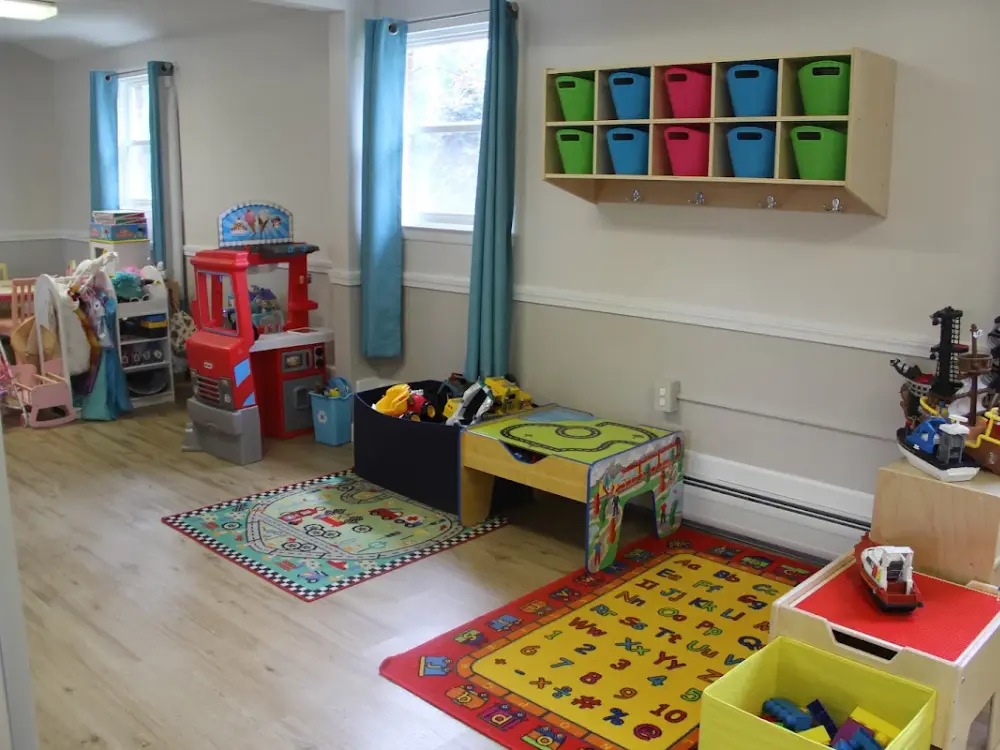
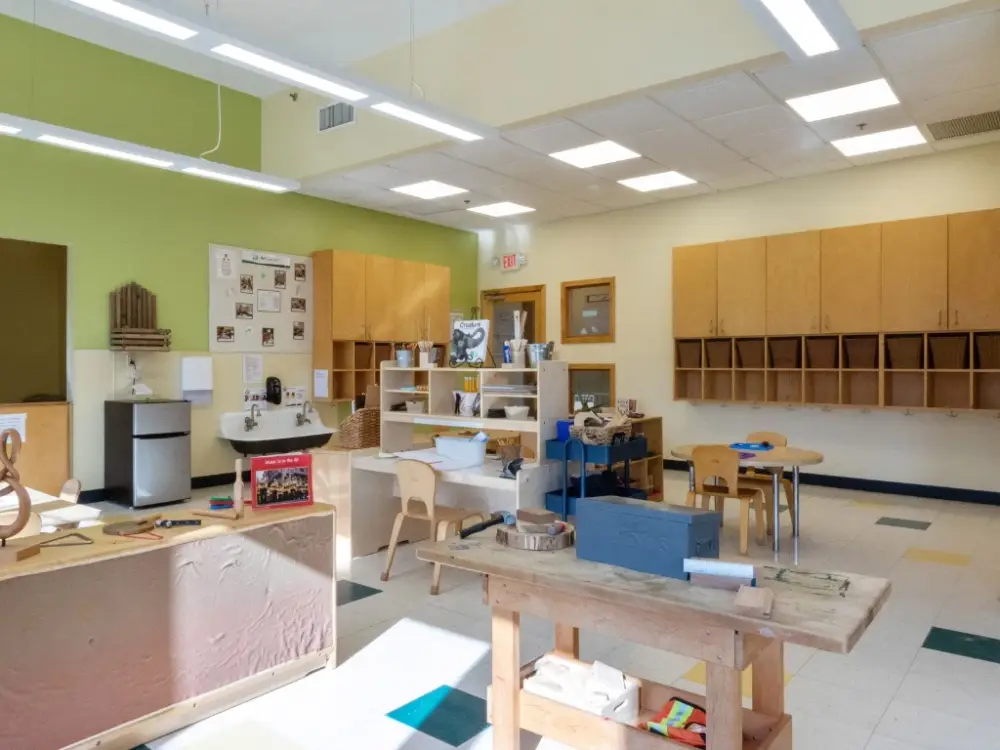
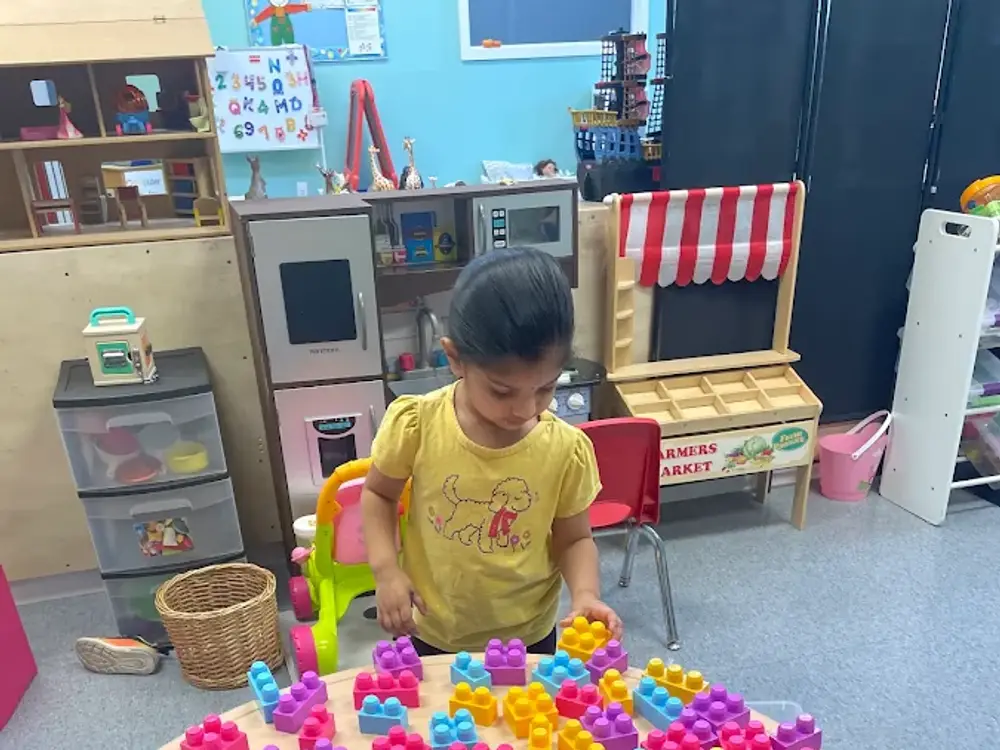
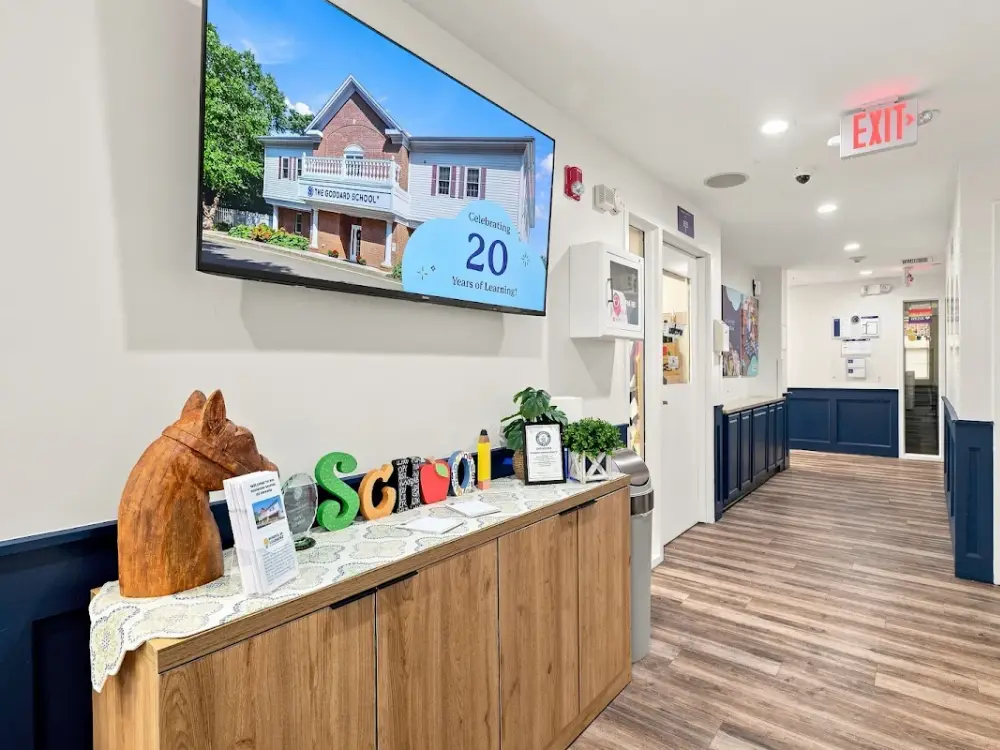
The Goddard School of Orange is a licensed daycare center in Orange, Connecticut, on the state register since 2006. It is licensed for 123 children and serves infant, toddler, preschool and school age ages.
The Goddard School of Orange provides early childhood education and daycare for children from infancy through Pre-Kindergarten.
The program states NAEYC accreditation and offers American Sign Language.
Tuition and capacity
Tuition: not listed. The Goddard School of Orange does not publish a fee schedule on its website. Programs in the area that publish full-time tuition have a median starting price of $1,408 a month.
Licensing and safety
Open the state record →Most violations are record-keeping, training or maintenance items, and nearly every program has some. Read what each one was and how fast it was fixed. Connecticut records each regulation cited at an inspection with the date it was closed. The state does not assign a risk level. The text shown is the regulation the program was cited under.
No Violations [-]
Regulation: -
Unused/Expired meds-destroyed/returned [19a-79-9a(b)(5)(D)]
Regulation: All unused or expired medication, except for controlled substances, shall be returned to the parent(s) or disposed of if it is not picked up within one week following the termination of the order, in the presence of at least one witness. The facility shall keep a written record of the medications destroyed for three years which shall be signed by both parties.
Consultants [19a-79-4a(i)(1-2)(H), (F)]
Regulation: An education consultant shall be available to the operator and program staff for advice and support regarding the educational content and practice of the program. A person needs to apply for approval to be an education consultant. Program staff shall not serve as education consultants for programs in which they provide direct care or direct program supervision in a non-consultative role; or in a program with the same operator as a program in which they provide direct care or direct program super
Policies- complete, implemented [19a-79-3a(d)(2)-(7)]
Regulation: The operator shall implement and annually review specific written policies, plans and procedures that include, but not necessarily be limited to discipline, when a child is not picked up as planned, multi-hazard and medical emergencies, supervision of children, general operating policies, administrative oversight and personnel policies. The operator shall notify the parent(s), staff and the Office of Early Childhood within five (5) days of changes in these policies, plans and procedures.
Preparation/transportation of food-follow DPH Model Food Code [19a-79-6a(a)(1)]
Regulation: Preparation and transportation of food(s) not prepared on the licensed premises shall satisfy all applicable requirements of the Department of Public Health’s Model Food Code.
Show all 40 violations on file
Diapering [19a-79-10(e)(1-10)]
Regulation: The diapering area shall be an elevated sturdy table or counter equipped with a safety rail. Infants and toddlers shall be diapered at a diapering area used only for this purpose and located in the program area. Each diapering area shall have a non-porous surface and be kept in good repair. Diapering areas shall be washed and disinfected after each use. Disposable paper sheets shall be used and discarded immediately after each diapering. A covered washable lined waste receptacle shall be availab
Potentially hazardous substances, materials - labeled, inaccessible to children [19a-79-7a(e)(10)]
Regulation: Potentially hazardous substances and materials in the child care centers and group child care homes shall be stored in a labeled container identifying the exact contents and dilutions, used according to the manufacturer’s instructions and for the intended purpose, handled in a safe manner and inaccessible to children.
Individual care plan- signed by parents/staff [19a-79-5a(a)(2)(E)]
Regulation: An individual plan of care for any child with special health care needs or disabilities when it is necessary that special care be taken or provided while a child is in attendance shall be developed and implemented with the child's parent(s) and health care provider and updated, as necessary. The plan shall include appropriate care of the child to prevent and respond to a medical or other emergency and shall be signed by the parent and program staff responsible for the care of the child.
Ensuring the safety & health of children [19a-79-3a(a)]
Regulation: The operator of the child care center or group child care home shall be responsible for compliance with the requirements of the Regulations of Connecticut State Agencies and applicable endorsements in such a manner as to ensure the safety, health and development of the children while in the operator's care.
Individual care plan- signed by parents/staff [19a-79-5a(a)(2)(E)]
Regulation: An individual plan of care for any child with special health care needs or disabilities when it is necessary that special care be taken or provided while a child is in attendance shall be developed and implemented with the child's parent(s) and health care provider and updated, as necessary. The plan shall include appropriate care of the child to prevent and respond to a medical or other emergency and shall be signed by the parent and program staff responsible for the care of the child.
Consultants [19a-79-4a(i)(1-2)(H), (F)]
Regulation: An education consultant shall be available to the operator and program staff for advice and support regarding the educational content and practice of the program. A person needs to apply for approval to be an education consultant. Program staff shall not serve as education consultants for programs in which they provide direct care or direct program supervision in a non-consultative role; or in a program with the same operator as a program in which they provide direct care or direct program super
Authorized prescriber/parent permission [19a-79-9a(b)(3)(A-B)]
Regulation: Except for nonprescription topical medications, no medication shall be administered to a child without the written order of an authorized prescriber and the written permission of the child's parent(s) which shall be on file at the facility. Individual written medication administration records for each child shall be written in ink, reviewed prior to administering each dose of medication and kept on file at the facility for at least three years after the child is no longer attending the program.
Unused/Expired meds-destroyed/returned [19a-79-9a(b)(5)(D)]
Regulation: All unused or expired medication, except for controlled substances, shall be returned to the parent(s) or disposed of if it is not picked up within one week following the termination of the order, in the presence of at least one witness. The facility shall keep a written record of the medications destroyed for three years which shall be signed by both parties.
Nutritious Snacks/Meals [19a-79-6a(a)(2)]
Regulation: A nutritionally adequate meal shall be provided by the child care center or group child care home, or the parent(s) whenever a child remains on the premises for five (5) hours or more. Children who stay on the premises less than five (5) hours shall have a nutritious snack. Children who stay on the premises longer than five (5) but less than eight (8) hours shall have one (1) meal and one (1) nutritious snack. Children who stay on the premises eight (8) hours or more shall have one (1) meal plus
Health Consultant/Documentation of Visits [19a-79-10(i)]
Regulation: A health consultant shall visit the program on the days and times children under the age of three (3) are present. The health consultant shall prepare and maintain signed documentation of visits which shall be kept on the licensed premises. The health consultant shall visit the program according to the following schedule: (A) once a week for children up to twenty-four (24) months of age, (B) once a week for children two (2) to three (3) years of age attending a full day, and (C) once a month fo
Required Toilets/Sinks/Supplies [19a-79-7a(d)(11)]
Regulation: Requirements regarding toilet and washing facilities shall be satisfied. Programs shall provide changing and sanitary facilities appropriate to meet the individual needs of children. Programs serving under age 6 shall have at least 1 toilet and sink with hot and cold running water for every 16 children. Programs serving only school age children shall have at least 1 toilet and sink with running water for every 25 children. Toilet tissue, soap, single use disposable towels and a waste receptacle
Oral/Topical/Inhalant/Injectable Medications: Authorized Prescriber/Parent Permission/MAR [19a-79-9a(b)(3) and/or 19a-79-9a(b)(4)]
Regulation: Except for nonprescription topical medications, no medication shall be administered to a child without the written order of an authorized prescriber and the written permission of the child's parent(s) which shall be on file at the facility. Individual written medication administration records for each child shall be written in ink, reviewed prior to administering each dose of medication and kept on file at the facility for at least two (2) years after the child is no longer attending the program
Potentially Hazardous Substances Locked [19a-79-7a(e)(10)]
Regulation: Potentially hazardous substances in the child care centers and group child care homes shall be stored in a separate locked area.
No Violations [-]
Regulation: -
Ratio: 1 Staff to 10 Children [19a-79-4a(c)(4)(A) thru (C) &/or 19a-79-4a(c)(6)]
Regulation: There shall be at least one (1) program staff person for every ten (10) children, or fraction thereof in attendance at all times. When there is a mixed age group, the lower required ratio for the age of the youngest child shall prevail. During nap time, when all of the children in the group are sleeping, the overall staff child ratios shall be maintained on the licensed premises. At no time shall a group of children be left unsupervised.
Under Three Endorsement: Ratio: 1 Staff to 4 Children [19a-79-10(c)(2) and/or 19a-79-4a(c)(6)]
Regulation: For children under three years of age, there shall be at least one (1) program staff for every four (4) children or fraction thereof in attendance. During nap time, when all of the children in the group are sleeping, the overall staff child ratios shall be maintained on the licensed premises. At no time shall a group of children be left unsupervised.
Crib/Bed Used for Infant Sleeping [19a-79-10(g)(1) and/or 19a-79-10(d)(2)(A)]
Regulation: Infants under twelve (12) months of age shall be placed for sleeping in a well constructed, free standing crib or bed designed for infant sleeping, with a snug fitting mattress. Furniture shall include well constructed free standing cribs, not stacked cribs, each of which has slats no more than two and three-eighths (2 3/8) inches apart and a fully waterproofed, firm, snug-fitting mattress for infants.
Sturdy/Safety Rail/Nonporous/Exclusive Use [19a-79-10(e)(1)(2)(3)]
Regulation: The diapering area shall be an elevated sturdy table or counter equipped with a safety rail. Infants and toddlers shall be diapered at a diapering area used only for this purpose and located in the program area. Each diapering area shall have a non-porous surface and be kept in good repair.
Individual Care Plan (Signed by Parent/Staff) [19a-79-5a(a)(2)(E)]
Regulation: The operator of a child care center or group child care home is responsible for maintaining on the licensed premises a current record for each child enrolled. A copy of the record shall be available and provided upon request to the Office of Early Childhood, the child's parent(s) and the local health director. It shall include an individual plan of care for any child with special health care needs or disabilities, developed with the child's parent(s) and health care provider and updated, as nece
Logs/Visits Documented [19a-79-4a(h)(2)(G)]
Regulation: A written plan for consultation services shall be developed, signed annually by the consultant and implemented. Consultative services shall include documenting the activities and observations in a consultation log that is kept on file at the facility for two years.
Authorized Released Permission [19a-79-5a(a)(1)(D)(ii)]
Regulation: The operator of a child care center or group child care home is responsible for maintaining on the licensed premises a current record for each child enrolled. A copy of the record shall be available and provided upon request to the Office of Early Childhood, the child's parent(s) and the local health director. It shall include specific written permission forms signed by the parent(s) authorizing one responsible person other than the parent(s) who can remove the child from the child care center o
Potentially Hazardous Substances Locked [19a-79-7a(e)(10)]
Regulation: Potentially hazardous substances in the child care centers and group child care homes shall be stored in a separate locked area.
Oral/Topical/Inhalant/Injectable Medications: Authorized Prescriber/Parent Permission/MAR [19a-79-9a(b)(3) and/or 19a-79-9a(b)(4)]
Regulation: Except for nonprescription topical medications, no medication shall be administered to a child without the written order of an authorized prescriber and the written permission of the child's parent(s) which shall be on file at the facility. Individual written medication administration records for each child shall be written in ink, reviewed prior to administering each dose of medication and kept on file at the facility for at least two (2) years after the child is no longer attending the program
Adequate Sinks in Program Space [19a-79-10(d)(1)]
Regulation: In child care centers that serve children under three years of age, there shall be a sink with hot and cold running water designated for diaper changing and hand washing of staff and children in the program space. Visual contact with all other children shall be maintained while changing diapers or using the sink. Child care centers which staff three (3) adults to a group size of eight (8) infants or toddlers may use an accessible diaper changing facility if it is immediately adjoining the progra
Staff Health Records [19a-79-4a(a)(1) and/or 19a-79-4a(a)(2)]
Regulation: A file shall be kept on the licensed premises for each employee of the child care center or group child care home which shall include an acceptable medical statement and a written report of a negative tuberculin test.
Enrollment Information [19a-79-5a(a)(1)(A) through (C)]
Regulation: The operator of a child care center or group child care home is responsible for maintaining on the licensed premises a current record for each child enrolled. A copy of the record shall be available and provided upon request to the Office of Early Childhood, the child's parent(s) and the local health director. The record shall include enrollment information and permission forms signed and dated by the parent(s).
Emergency Medical Permission [19a-79-5a(a)(1)(D)(i)]
Regulation: The operator of a child care center or group child care home is responsible for maintaining on the licensed premises a current record for each child enrolled. A copy of the record shall be available and provided upon request to the Office of Early Childhood, the child's parent(s) and the local health director. It shall include specific written permission forms signed by the parent(s) authorizing the operator to use the programs emergency policies which shall accompany the child on trips
Health Consultant/Documentation of Visits [19a-79-10(i)]
Regulation: A health consultant shall visit the program on the days and times children under the age of three (3) are present. The health consultant shall prepare and maintain signed documentation of visits which shall be kept on the licensed premises. The health consultant shall visit the program according to the following schedule: (A) once a week for children up to twenty-four (24) months of age, (B) once a week for children two (2) to three (3) years of age attending a full day, and (C) once a month fo
Under Three Endorsement: Ratio: 1 Staff to 4 Children [19a-79-10(c)(2) and/or 19a-79-4a(c)(6)]
Regulation: For children under three years of age, there shall be at least one (1) program staff for every four (4) children or fraction thereof in attendance. During nap time, when all of the children in the group are sleeping, the overall staff child ratios shall be maintained on the licensed premises. At no time shall a group of children be left unsupervised.
Documentation of Behavioral Management Techniques Discussed with Parents [19a-79-3a(b)(8)(B)]
Regulation: The operator shall document that the techniques used to manage child behaviors in the facility have been discussed with the child's parent(s) prior to enrollment and reviewed as needed during the period of the child's enrollment.
Ventilation in Toilet Room [19a-79-7a(d)(11)(F) &/or19a-79-7a(d)(11)(G)]
Regulation: Each toilet room shall be ventilated to the outside atmosphere. In child care centers constructed or renovated after January 1, 1994, all toilet facilities shall be mechanically ventilated to the outside atmosphere.
Walls/Ceilings/Floors/Rugs: Clean/Good Repair [19a-79-7a(e)(5)]
Regulation: Walls, ceilings, floors and rugs shall be maintained in a state of good repair and be washable or easily cleanable.
Individual Care Plan (Signed by Parent/Staff) [19a-79-5a(a)(2)(E)]
Regulation: The operator of a child care center or group child care home is responsible for maintaining on the licensed premises a current record for each child enrolled. A copy of the record shall be available and provided upon request to the Office of Early Childhood, the child's parent(s) and the local health director. It shall include an individual plan of care for any child with special health care needs or disabilities, developed with the child's parent(s) and health care provider and updated, as nece
Nutritious Snacks/Meals [19a-79-6a(a)(2)]
Regulation: A nutritionally adequate meal shall be provided by the child care center or group child care home, or the parent(s) whenever a child remains on the premises for five (5) hours or more. Children who stay on the premises less than five (5) hours shall have a nutritious snack. Children who stay on the premises longer than five (5) but less than eight (8) hours shall have one (1) meal and one (1) nutritious snack. Children who stay on the premises eight (8) hours or more shall have one (1) meal plus
First Aid Kit(s):Indoor/Outdoor/Field Trip [19a-6a(c) and/or 19a-6a(d)]
Regulation: The facility shall maintain at least one (1) portable, readily available first aid kit wherever children are in care, including field trips, outdoor play areas and one to remain at the facility if all the children do not attend the field trip. Each kit shall be a closed container for storing first aid supplies, accessible to staff at all times but out of the reach of children. The first aid kit shall contain specified items and be restocked after use, and an inventory shall be conducted at least
What parents say
We are so grateful for the amazing teachers and staff at The Goddard School Our daughter had such a wonderful experience, and we truly couldn’t have asked for better teachers. They were so caring, patient, supportive, and genuinely invested in her happiness and growth. They made her feel loved, safe, and excited to come to school every day, and we could truly see how much she grew and blossomed throughout her time…
S V · 5/5 on Google · 2 weeks agoWe moved our daughter from another school to Goddard , I wish we had originally did more due diligence. From the director to the teachers and the cost this is the only preschool/daycare You should use if you’re in the Milford/Orange area. Everything that was lacking in the other school was completely fulfilled at Goddard. 5 star
James Volosin JR · 5/5 on Google · 2 months agoWe have been a Goddard family since my daughter was 3 months old! Bri started at Goddard in Orange when she was 1! We have had nothing but amazing experiences with Goddard as a whole and Orange has been exceptional with our bundke of energy! The staff all welcome us every day and you can tell they love what they do! Bri is advanced in her development and I give Goddard so much credit for the work they have done with…
Jennifer Goldman · 5/5 on Google · 10 months agoTransitioning from the infant room to the toddler stage can be a big step, but the teachers, Ms. Joyce and Ms. Jenn, made it seamless for our child. The teachers and staff are incredibly warm and patient, and we saw so much growth in our child during their time here. We are sad to leave but so grateful for the foundation they built here at Goddard Orange!
Good Faith · 5/5 on Google · 5 months agoGetting there
42 Old Tavern Rd, Orange, CT 06477
Questions about The Goddard School of Orange
Is The Goddard School of Orange licensed?
Yes. The Goddard School of Orange holds an active Child Care Center licence from Connecticut Office of Early Childhood (licence DCCC.16237), with a licensed capacity of 123 children. The state record was synced in September 2026.
Has The Goddard School of Orange had any inspection violations?
Connecticut records 22 violations for The Goddard School of Orange in the last three years, across 7 inspections on file. The median daycare center in the area has 15. Each one is listed above with the date it was corrected.
What ages does The Goddard School of Orange take?
The Goddard School of Orange is licensed to serve infant, toddler, preschool and school age ages, and is open 7 am to 6 pm, Mon to Fri.
How much does The Goddard School of Orange cost?
The Goddard School of Orange does not publish tuition on its website. Ask for the full fee schedule on a tour, including registration, supply and late pick-up fees.