Happy Time Nursery School
Daycare center in Norwalk, CT. 260 New Canaan Avenue, Norwalk, CT 06850
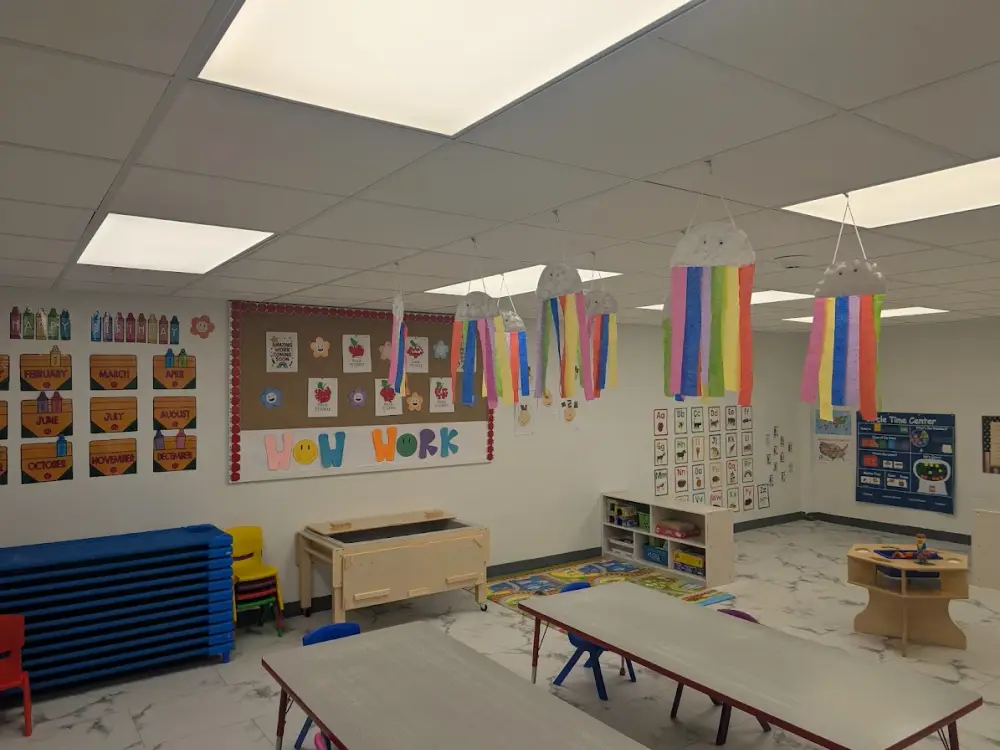
About the program
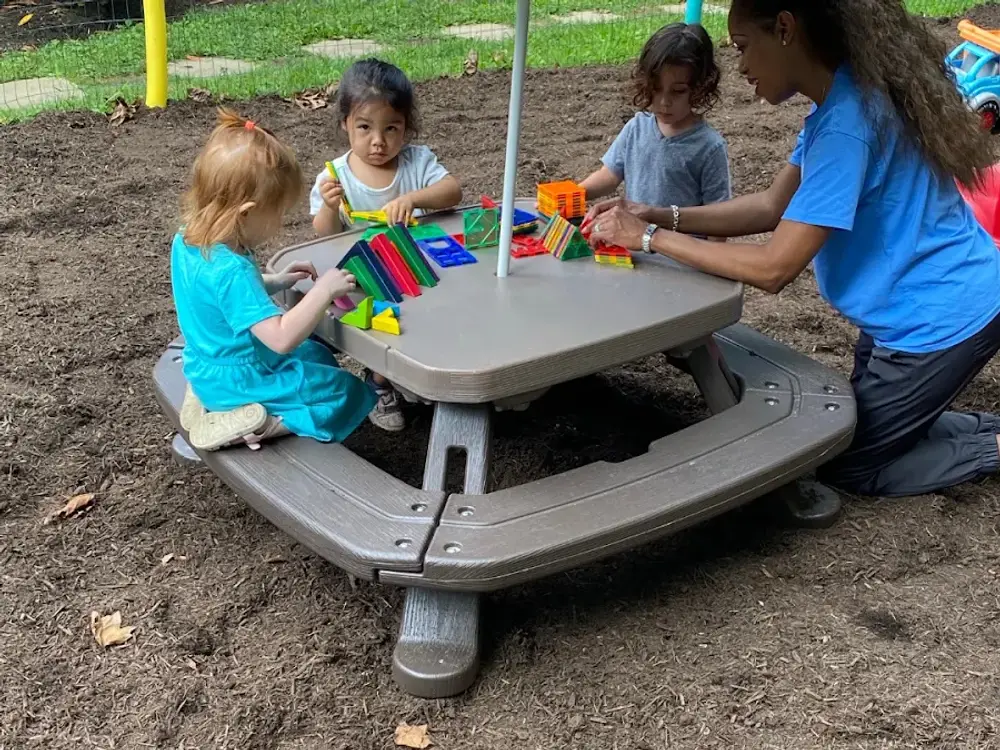
Happy Time Nursery School is a licensed daycare center in Norwalk, Connecticut, on the state register since 2004. It is licensed for 34 children and serves infant, toddler, preschool and school age ages.
Happy Time Nursery School is a faith-based Christian program in Norwalk serving children from infants through preschool age.
The program follows a faith-based and play-based approach.
Tuition and capacity
Tuition: not listed. Happy Time Nursery School does not publish a fee schedule on its website. Programs in the area that publish full-time tuition have a median starting price of $1,967 a month.
Licensing and safety
Open the state record →Most violations are record-keeping, training or maintenance items, and nearly every program has some. Read what each one was and how fast it was fixed. Connecticut records each regulation cited at an inspection with the date it was closed. The state does not assign a risk level. The text shown is the regulation the program was cited under.
Notification of Change [19a-79-3a(c)(1-4)]
Regulation: The operator shall notify the Office of Early Childhood, the parent(s) and staff of any changes in programs or services. Notification of personnel changes shall be made within five (5) business days after the change. If the change is for a head teacher, a plan for interim head teacher coverage shall be submitted to the Office of Early Childhood. A qualified head teacher or a plan approved by the commissioner shall be in place within thirty (30) days of change of a qualified head teacher. Notific
Exits, stairs, hallways unobstructed [19a-79-7a(d)(6)-(f)(3)]
Regulation: Exit doorways, stairs or hallways shall not be blocked by furniture, toys or play equipment. Cots, cribs and playpens shall be placed so that walkways are clear for emergencies and evacuation.
No Violations [-]
Regulation: -
No Violations [-]
Regulation: -
Professional development [19a-79-4a(a)(2), (h)(1-2)]
Regulation: Documentation of professional development for each program staff who cares for the children, including new employee orientation and annual training for current program staff on the child care center or group child care home policies, plans and procedures. Program staff, including the director, shall complete health and safety training no later than three months after the date of hire. Written verification of ongoing training that is at least one percent of the total annual hours worked. As of A
Show all 61 violations on file
Diapering [19a-79-10(e)(1-10)]
Regulation: The diapering area shall be an elevated sturdy table or counter equipped with a safety rail. Infants and toddlers shall be diapered at a diapering area used only for this purpose and located in the program area. Each diapering area shall have a non-porous surface and be kept in good repair. Diapering areas shall be washed and disinfected after each use. Disposable paper sheets shall be used and discarded immediately after each diapering. A covered washable lined waste receptacle shall be availab
Exits, stairs, hallways unobstructed [19a-79-7a(d)(6)-(f)(3)]
Regulation: Exit doorways, stairs or hallways shall not be blocked by furniture, toys or play equipment. Cots, cribs and playpens shall be placed so that walkways are clear for emergencies and evacuation.
Walls/ceilings/floors/rugs-clean, good repair [19a-79-7a(e)(5)]
Regulation: Walls, ceilings, floors and rugs shall be maintained in a state of good repair and be washable or easily cleanable. Rugs, if used, shall not present a tripping or slipping hazard.
Potentially hazardous substances, materials - labeled, inaccessible to children [19a-79-7a(e)(10)]
Regulation: Potentially hazardous substances and materials in the child care centers and group child care homes shall be stored in a labeled container identifying the exact contents and dilutions, used according to the manufacturer’s instructions and for the intended purpose, handled in a safe manner and inaccessible to children.
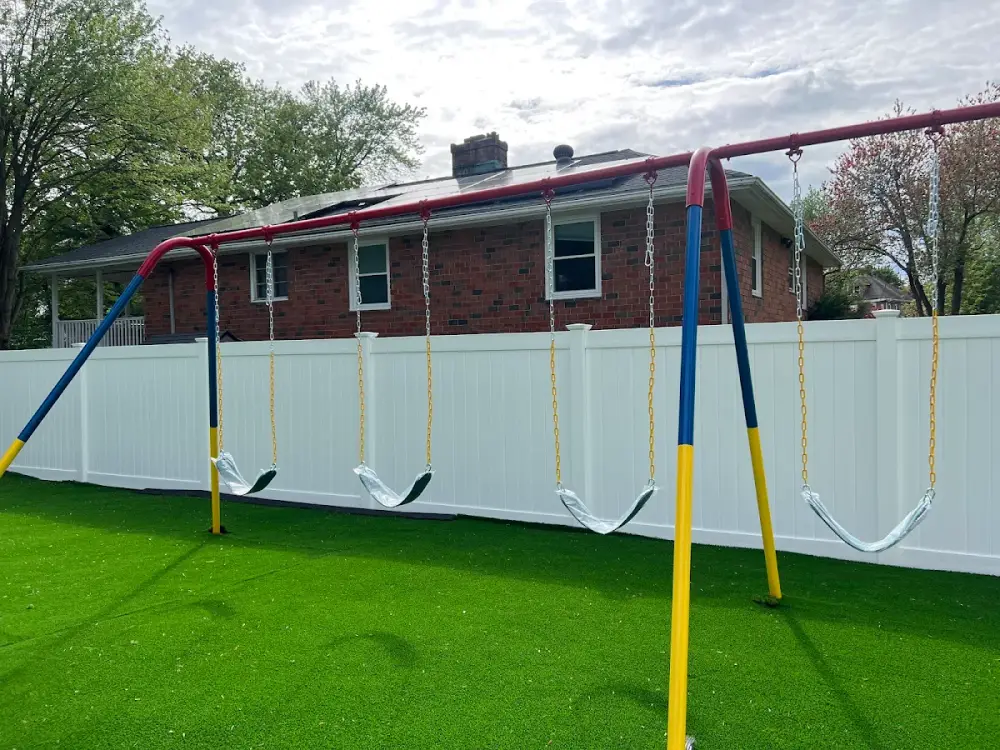
Outdoor space [19a-79-7a(h)(1-9)]
Regulation: There shall be access to a minimum of seventy-five (75) square feet per child of outdoor space for the number of children using the space at any one time. The outdoor area shall be fenced or protected for safety. Outdoor play equipment shall have a shock absorbing surface, under and around, that shall effectively cushion the fall of a child, except where the child is sitting or standing at ground level. The shock absorbing surface shall be maintained at a depth of at least eight inches, be free
Group size- max 8 (6wks-24mths), max 10 (24-36mths) [19a-79-10(c)(3)]
Regulation: The group size shall not exceed eight for children that are under the age of two years and shall not exceed ten for children that are two years old, indoors and outdoors.
Physical barriers- indoors/outdoors [19a-79-10(c)(4)]
Regulation: There shall be a physical barrier separating each group of children under the age of three, indoors and outdoors.
Authorized prescriber/parent permission [19a-79-9a(b)(3)(A-B)]
Regulation: Except for nonprescription topical medications, no medication shall be administered to a child without the written order of an authorized prescriber and the written permission of the child's parent(s) which shall be on file at the facility. Individual written medication administration records for each child shall be written in ink, reviewed prior to administering each dose of medication and kept on file at the facility for at least three years after the child is no longer attending the program.
Diapering [19a-79-10(e)(1-10)]
Regulation: The diapering area shall be an elevated sturdy table or counter equipped with a safety rail. Infants and toddlers shall be diapered at a diapering area used only for this purpose and located in the program area. Each diapering area shall have a non-porous surface and be kept in good repair. Diapering areas shall be washed and disinfected after each use. Disposable paper sheets shall be used and discarded immediately after each diapering. A covered washable lined waste receptacle shall be availab
Notification of Change [19a-79-3a(c)(1-4)]
Regulation: The operator shall notify the Office of Early Childhood, the parent(s) and staff of any changes in programs or services. Notification of personnel changes shall be made within five (5) business days after the change. If the change is for a head teacher, a plan for interim head teacher coverage shall be submitted to the Office of Early Childhood. A qualified head teacher or a plan approved by the commissioner shall be in place within thirty (30) days of change of a qualified head teacher. Notific
Professional development [19a-79-4a(a)(2), (h)(1-2)]
Regulation: Documentation of professional development for each program staff who cares for the children, including new employee orientation and annual training for current program staff on the child care center or group child care home policies, plans and procedures. Program staff, including the director, shall complete health and safety training no later than three months after the date of hire. Written verification of ongoing training that is at least one percent of the total annual hours worked. As of A
Consultants [19a-79-4a(i)(1-2)(H), (F)]
Regulation: An education consultant shall be available to the operator and program staff for advice and support regarding the educational content and practice of the program. A person needs to apply for approval to be an education consultant. Program staff shall not serve as education consultants for programs in which they provide direct care or direct program supervision in a non-consultative role; or in a program with the same operator as a program in which they provide direct care or direct program super
Group size- max 8 (6wks-24mths), max 10 (24-36mths) [19a-79-10(c)(3)]
Regulation: The group size shall not exceed eight for children that are under the age of two years and shall not exceed ten for children that are two years old, indoors and outdoors.
Physical barriers- indoors/outdoors [19a-79-10(c)(4)]
Regulation: There shall be a physical barrier separating each group of children under the age of three, indoors and outdoors.
CO/NCAP Compliance Violation(s) [-]
Regulation: A Negotiated Corrective Action Plan or Consent Order is a voluntary agreement in which a provider/program agrees to take certain steps or make changes above and beyond the regulations in order to retain their license. The operator shall ensure compliance with the conditions.
Documentation of Behavioral Management Techniques Discussed with Parents [19a-79-3a(b)(7)(B)]
Regulation: The operator shall document that parents have been informed of the techniques used to manage child behaviors in the facility prior to enrollment and reviewed as needed during the period of the child's enrollment.
Licensed premises-clean, good repair, hazard free-maintenance program [19a-79-7a(c)(2)]
Regulation: For programs serving children younger than school age, the building, equipment and furnishings shall be maintained in a good state of repair. A maintenance program shall be established that ensures that the interior, exterior and grounds of the building are maintained, kept clean and orderly, free from accumulations of refuse, dampness, stagnant water, dilapidated structures and other health and safety hazards.
Potentially hazardous substances, materials - labeled, inaccessible to children [19a-79-7a(e)(10)]
Regulation: Potentially hazardous substances and materials in the child care centers and group child care homes shall be stored in a labeled container identifying the exact contents and dilutions, used according to the manufacturer’s instructions and for the intended purpose, handled in a safe manner and inaccessible to children.
Manufacture guidelines followed-furniture, equipment and toys- CPSC unsafe/recalls [19a-79-7a(g)(5)]
Regulation: All manufacturer guidelines shall be followed for furniture, equipment and any toy that is used by, or around, children. Any furniture, equipment and toy that has been identified by the United States Consumer Product Safety Commission as unsafe or subject to recall shall be removed or repaired as indicated.
Outdoor space [19a-79-7a(h)(1-9)]
Regulation: There shall be access to a minimum of seventy-five (75) square feet per child of outdoor space for the number of children using the space at any one time. The outdoor area shall be fenced or protected for safety. Outdoor play equipment shall have a shock absorbing surface, under and around, that shall effectively cushion the fall of a child, except where the child is sitting or standing at ground level. The shock absorbing surface shall be maintained at a depth of at least eight inches, be free
Hot water/steam pipes protected [19a-79-7a(e)(6)]
Regulation: Hot water or steam pipes located in areas accessible to children shall have adequate protective covering which is maintained safely and in good repair.
Staff personal articles inaccessible [19a-79-7a(d)(11)]
Regulation: Backpacks, handbags, purses or other bags belonging to adults, staff or program staff for carrying personal articles shall not be accessible to children.
Individual care plan- signed by parents/staff [19a-79-5a(a)(2)(E)]
Regulation: An individual plan of care for any child with special health care needs or disabilities when it is necessary that special care be taken or provided while a child is in attendance shall be developed and implemented with the child's parent(s) and health care provider and updated, as necessary. The plan shall include appropriate care of the child to prevent and respond to a medical or other emergency and shall be signed by the parent and program staff responsible for the care of the child.
Ensuring the safety & health of children [19a-79-3a(a)]
Regulation: The operator of the child care center or group child care home shall be responsible for compliance with the requirements of the Regulations of Connecticut State Agencies and applicable endorsements in such a manner as to ensure the safety, health and development of the children while in the operator's care.
Individual care plan- signed by parents/staff [19a-79-5a(a)(2)(E)]
Regulation: An individual plan of care for any child with special health care needs or disabilities when it is necessary that special care be taken or provided while a child is in attendance shall be developed and implemented with the child's parent(s) and health care provider and updated, as necessary. The plan shall include appropriate care of the child to prevent and respond to a medical or other emergency and shall be signed by the parent and program staff responsible for the care of the child.
Notification of Change [19a-79-3a(c)(1-4)]
Regulation: The operator shall notify the Office of Early Childhood, the parent(s) and staff of any changes in programs or services. Notification of personnel changes shall be made within five (5) business days after the change. If the change is for a head teacher, a plan for interim head teacher coverage shall be submitted to the Office of Early Childhood. A qualified head teacher or a plan approved by the commissioner shall be in place within thirty (30) days of change of a qualified head teacher. Notific
Annual policy training for program staff [19a-79-3a(b)(6)]
Regulation: The operator shall assure annual training for all current program staff on the child care center or group child care home policies, plans and procedures.
Professional development [19a-79-4a(a)(2), (h)(1-2)]
Regulation: Documentation of professional development for each program staff who cares for the children, including new employee orientation and annual training for current program staff on the child care center or group child care home policies, plans and procedures. Program staff, including the director, shall complete health and safety training no later than three months after the date of hire. Written verification of ongoing training that is at least one percent of the total annual hours worked. As of A
Comprehensive background checks [19a-79-4a(b)]
Regulation: The operator shall ensure that all program staff have completed a comprehensive background check before they have unsupervised access to children. The operator shall provide to the Office of Early Childhood any information obtained concerning substantiated child abuse or neglect records or criminal convictions upon request. The operator shall obtain from each prospective employee, who is eighteen years of age or older, for a position that requires the provision of care to a child or involves uns
Consultants [19a-79-4a(i)(1-2)(H), (F)]
Regulation: An education consultant shall be available to the operator and program staff for advice and support regarding the educational content and practice of the program. A person needs to apply for approval to be an education consultant. Program staff shall not serve as education consultants for programs in which they provide direct care or direct program supervision in a non-consultative role; or in a program with the same operator as a program in which they provide direct care or direct program super
Licensed premises-clean, good repair, hazard free-maintenance program [19a-79-7a(c)(2)]
Regulation: For programs serving children younger than school age, the building, equipment and furnishings shall be maintained in a good state of repair. A maintenance program shall be established that ensures that the interior, exterior and grounds of the building are maintained, kept clean and orderly, free from accumulations of refuse, dampness, stagnant water, dilapidated structures and other health and safety hazards.
Toileting [19a-79-7a(d)(10)(A-H)]
Regulation: Where toilets and sinks are shared by children and adults, a written policy shall be developed and implemented that requires supervision of children when using the shared toilet room. Programs shall provide changing and sanitary facilities appropriate to meet the individual needs of children who are enrolled at the facility who need assistance with toileting or who are not independent with toileting. Facilities using potty chairs in addition to the required toilets shall ensure that they are of
Adequate sinks-handwashing-diapering/other use-food prep [19a-79-10(d)(1)(A-C)]
Regulation: In child care centers there shall be a sink with hot and cold running water designated for diaper changing and hand washing of program staff and children. This sink shall be located in the program space. Child care centers which have three program staff for a group of infants or toddlers may use an accessible diaper changing facility if it is immediately adjoining the program area. Separate sinks shall be available for purposes other than hand washing after diaper changing within child care cent
First Aid Kit(s):Indoor/Outdoor/Field Trip [19a-79-6a(c)]
Regulation: The facility shall maintain at least one portable, readily accessible first aid kit wherever children are in care, including field trips. A first aid kit shall be located outside and readily accessible wherever and whenever children are outside. A first aid kit shall be located indoors and readily accessible wherever and whenever children are indoors. Each first aid kit shall be a closed container for storing first aid supplies, accessible to staff at all times but out of the reach of children.
Outdoor space [19a-79-7a(h)(1-9)]
Regulation: There shall be access to a minimum of seventy-five (75) square feet per child of outdoor space for the number of children using the space at any one time. The outdoor area shall be fenced or protected for safety. Outdoor play equipment shall have a shock absorbing surface, under and around, that shall effectively cushion the fall of a child, except where the child is sitting or standing at ground level. The shock absorbing surface shall be maintained at a depth of at least eight inches, be free
Authorized prescriber/parent permission [19a-79-9a(b)(3)(A-B)]
Regulation: Except for nonprescription topical medications, no medication shall be administered to a child without the written order of an authorized prescriber and the written permission of the child's parent(s) which shall be on file at the facility. Individual written medication administration records for each child shall be written in ink, reviewed prior to administering each dose of medication and kept on file at the facility for at least three years after the child is no longer attending the program.
Staff Health Records [19a-79-4a(a)(1)]
Regulation: A file shall be kept on the licensed premises for each employee of the child care center or group child care home which shall include an acceptable medical statement, completed within 12 months before the date of employment for new program staff, and every 36 months for current program staff. Such statement shall document the presence of any known medical or emotional illness or disorder that would currently pose a risk to children.
Diapering [19a-79-10(e)(1-10)]
Regulation: The diapering area shall be an elevated sturdy table or counter equipped with a safety rail. Infants and toddlers shall be diapered at a diapering area used only for this purpose and located in the program area. Each diapering area shall have a non-porous surface and be kept in good repair. Diapering areas shall be washed and disinfected after each use. Disposable paper sheets shall be used and discarded immediately after each diapering. A covered washable lined waste receptacle shall be availab
001b-Administration-Ensuring the safety, health & development of children [19a-79-3a]
Regulation: The operator of the child care center or group child care home shall be responsible for compliance with the requirements of the Regulations of Connecticut State Agencies and applicable endorsements in such a manner as to ensure the safety, health and development of the children while in the operator's care.
Consultant Agreements/Contracts [19a-79-4a(h)(1) and/or 19a-79-4a(h)(2)]
Regulation: A written plan for consultation services shall be developed, signed annually by the consultant and implemented. These services shall include an early childhood educational consultant, a health consultant, a dentist or dental hygienist consultant, a social service consultant, and a registered dietitian consultant for those programs that serve meals. Consultative services shall include annual review of written policies, plans and procedures, annual review of education programs, availability by tel
Individual Care Plan (Signed by Parent/Staff) [19a-79-5a(a)(2)(E)]
Regulation: The operator of a child care center or group child care home is responsible for maintaining on the licensed premises a current record for each child enrolled. A copy of the record shall be available and provided upon request to the Office of Early Childhood, the child's parent(s) and the local health director. It shall include an individual plan of care for any child with special health care needs or disabilities, developed with the child's parent(s) and health care provider and updated, as nece
Oral/Topical/Inhalant/Injectable Medications: Authorized Prescriber/Parent Permission/MAR [19a-79-9a(b)(3) and/or 19a-79-9a(b)(4)]
Regulation: Except for nonprescription topical medications, no medication shall be administered to a child without the written order of an authorized prescriber and the written permission of the child's parent(s) which shall be on file at the facility. Individual written medication administration records for each child shall be written in ink, reviewed prior to administering each dose of medication and kept on file at the facility for at least two (2) years after the child is no longer attending the program
Logs/Visits Documented [19a-79-4a(h)(2)(G)]
Regulation: A written plan for consultation services shall be developed, signed annually by the consultant and implemented. Consultative services shall include documenting the activities and observations in a consultation log that is kept on file at the facility for two years.
License Premise Clean/Good Repair/Safe [19a-79-6a and/or 19a-79-7a]
Regulation: The building, equipment and services shall be maintained in a good state of repair. A maintenance program shall be established that ensures that the interior, exterior and grounds of the building are maintained, kept clean and orderly, free from accumulations of refuse, dampness, stagnant water, dilapidated structures and other health and safety hazards.
No Violations [-]
Regulation: -
No Violations [-]
Regulation: -
Under Three Endorsement: Physical Barriers/Groups of 8 (Indoors/Outdoors) [19a-79-10(c)(4)]
Regulation: For children under three years of age, there shall be a physical barrier separating each group of eight (8) children, indoors and outdoors.
Under Three Endorsement: Group Size no Larger than 8 [19a-79-10(c)(3)]
Regulation: For children under three years of age, the group size shall not exceed eight (8) children.
000 No Violations [-]
Regulation: -
Local Health Inspection [19a-79-2a(c)(7)]
Regulation: At least every two (2) years, the local health director shall make unannounced visits, inspections or investigations of the licensed child care center or group child care home.
Consultant Agreements/Contracts [19a-79-4a(h)(1) and/or 19a-79-4a(h)(2)]
Regulation: A written plan for consultation services shall be developed, signed annually by the consultant and implemented. These services shall include an early childhood educational consultant, a health consultant, a dentist or dental hygienist consultant, a social service consultant, and a registered dietitian consultant for those programs that serve meals. Consultative services shall include annual review of written policies, plans and procedures, annual review of education programs, availability by tel
Health Consultant/Documentation of Visits [19a-79-10(i)]
Regulation: A health consultant shall visit the program on the days and times children under the age of three (3) are present. The health consultant shall prepare and maintain signed documentation of visits which shall be kept on the licensed premises. The health consultant shall visit the program according to the following schedule: (A) once a week for children up to twenty-four (24) months of age, (B) once a week for children two (2) to three (3) years of age attending a full day, and (C) once a month fo
Under Three Endorsement: Group Size no Larger than 8 [19a-79-10(c)(3)]
Regulation: For children under three years of age, the group size shall not exceed eight (8) children.
Logs/Visits Documented [19a-79-4a(h)(2)(G)]
Regulation: A written plan for consultation services shall be developed, signed annually by the consultant and implemented. Consultative services shall include documenting the activities and observations in a consultation log that is kept on file at the facility for two years.
Under Three Endorsement: Physical Barriers/Groups of 8 (Indoors/Outdoors) [19a-79-10(c)(4)]
Regulation: For children under three years of age, there shall be a physical barrier separating each group of eight (8) children, indoors and outdoors.
Nonprescription Topical Medications: Administration/Parent Permission/MAR [19a-79-9a(a)(2)]
Regulation: The written permission of the parent(s) shall be required prior to the administration of the nonprescription topical medication and a medication administration record shall be written in ink and kept on file at the facility for each child administered a nonprescription topical medication.
Getting there
260 New Canaan Avenue, Norwalk, CT 06850
Questions about Happy Time Nursery School
Is Happy Time Nursery School licensed?
Yes. Happy Time Nursery School holds an active Child Care Center licence from Connecticut Office of Early Childhood (licence DCCC.16062), with a licensed capacity of 34 children. The state record was synced in September 2026.
Has Happy Time Nursery School had any inspection violations?
Connecticut records 50 violations for Happy Time Nursery School in the last three years, across 8 inspections on file. The median daycare center in the area has 12. Each one is listed above with the date it was corrected.
What ages does Happy Time Nursery School take?
Happy Time Nursery School is licensed to serve infant, toddler, preschool and school age ages, and is open 7:30 am to 5:30 pm, Mon to Fri.
How much does Happy Time Nursery School cost?
Happy Time Nursery School does not publish tuition on its website. Ask for the full fee schedule on a tour, including registration, supply and late pick-up fees.