The Riverfront Children's Center, Inc.
Daycare center in Groton, CT. 476 Thames St, Groton, CT 06340
About the program
The Riverfront Children's Center, Inc. is a licensed daycare center in Groton, Connecticut, on the state register since 1995. It is licensed for 123 children and serves infant, toddler and preschool ages.
Riverfront Children's Center is a nonprofit early learning center in Groton, Connecticut, serving children from 12 weeks through Kindergarten.
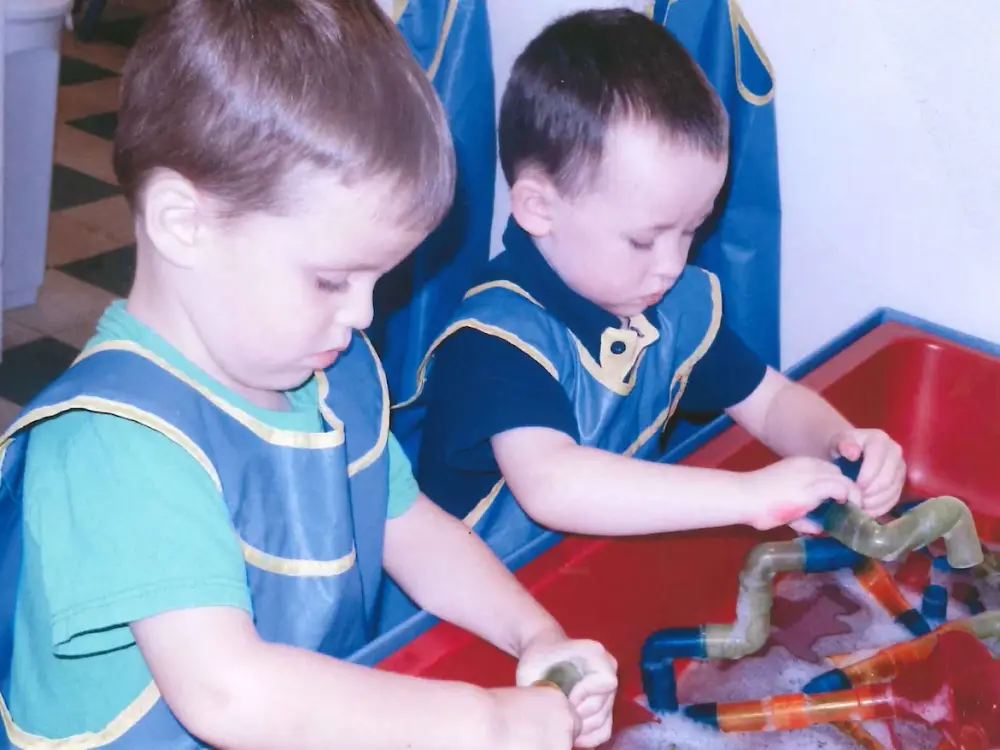
The program follows a play-based approach and states NAEYC accreditation.
Tuition and capacity
Tuition: not listed. The Riverfront Children's Center, Inc. does not publish a fee schedule on its website. Programs in the area that publish full-time tuition have a median starting price of $1,203 a month.
Licensing and safety
Open the state record →Most violations are record-keeping, training or maintenance items, and nearly every program has some. Read what each one was and how fast it was fixed. Connecticut records each regulation cited at an inspection with the date it was closed. The state does not assign a risk level. The text shown is the regulation the program was cited under.
Diapering [19a-79-10(e)(1-10)]
Regulation: The diapering area shall be an elevated sturdy table or counter equipped with a safety rail. Infants and toddlers shall be diapered at a diapering area used only for this purpose and located in the program area. Each diapering area shall have a non-porous surface and be kept in good repair. Diapering areas shall be washed and disinfected after each use. Disposable paper sheets shall be used and discarded immediately after each diapering. A covered washable lined waste receptacle shall be availab
Water supply- water testing [19a-79-7a(c)(5)(A-C)]
Regulation: Water supply, food service and sewage disposal facilities shall be adequate, safe and in compliance with all applicable sections of the Regulations of Connecticut State Agencies. Water from at least one drinking fountain or drinking, beverage and food preparation sink, and from two such sources if the facility has more than one, shall be tested every two years for lead content. The water sample shall have been standing in plumbing pipes at least six hours and the results shall be submitted to th
Toileting [19a-79-7a(d)(10)(A-H)]
Regulation: Where toilets and sinks are shared by children and adults, a written policy shall be developed and implemented that requires supervision of children when using the shared toilet room. Programs shall provide changing and sanitary facilities appropriate to meet the individual needs of children who are enrolled at the facility who need assistance with toileting or who are not independent with toileting. Facilities using potty chairs in addition to the required toilets shall ensure that they are of
Comprehensive background checks [19a-79-4a(b)]
Regulation: The operator shall ensure that all program staff have completed a comprehensive background check before they have unsupervised access to children. The operator shall provide to the Office of Early Childhood any information obtained concerning substantiated child abuse or neglect records or criminal convictions upon request. The operator shall obtain from each prospective employee, who is eighteen years of age or older, for a position that requires the provision of care to a child or involves uns
Consultants [19a-79-4a(i)(1-2)(H), (F)]
Regulation: An education consultant shall be available to the operator and program staff for advice and support regarding the educational content and practice of the program. A person needs to apply for approval to be an education consultant. Program staff shall not serve as education consultants for programs in which they provide direct care or direct program supervision in a non-consultative role; or in a program with the same operator as a program in which they provide direct care or direct program super
Show all 48 violations on file
Indoor climbing play equipment- shock absorbing materials under and around [19a-79-7a(g)(6)]
Regulation: Indoor play equipment for climbing shall have a shock absorbing surface, under and around, that shall effectively cushion the fall of a child. Carpet is not considered a shock absorbing surface.
Outdoor space [19a-79-7a(h)(1-9)]
Regulation: There shall be access to a minimum of seventy-five (75) square feet per child of outdoor space for the number of children using the space at any one time. The outdoor area shall be fenced or protected for safety. Outdoor play equipment shall have a shock absorbing surface, under and around, that shall effectively cushion the fall of a child, except where the child is sitting or standing at ground level. The shock absorbing surface shall be maintained at a depth of at least eight inches, be free
Staff Health Records [19a-79-4a(a)(1)]
Regulation: A file shall be kept on the licensed premises for each employee of the child care center or group child care home which shall include an acceptable medical statement, completed within 12 months before the date of employment for new program staff, and every 36 months for current program staff. Such statement shall document the presence of any known medical or emotional illness or disorder that would currently pose a risk to children.
No Violations [-]
Regulation: -
Consultants [19a-79-4a(i)(1-2)(H), (F)]
Regulation: An education consultant shall be available to the operator and program staff for advice and support regarding the educational content and practice of the program. A person needs to apply for approval to be an education consultant. Program staff shall not serve as education consultants for programs in which they provide direct care or direct program supervision in a non-consultative role; or in a program with the same operator as a program in which they provide direct care or direct program super
Indoor climbing play equipment- shock absorbing materials under and around [19a-79-7a(g)(6)]
Regulation: Indoor play equipment for climbing shall have a shock absorbing surface, under and around, that shall effectively cushion the fall of a child. Carpet is not considered a shock absorbing surface.
Outdoor space [19a-79-7a(h)(1-9)]
Regulation: There shall be access to a minimum of seventy-five (75) square feet per child of outdoor space for the number of children using the space at any one time. The outdoor area shall be fenced or protected for safety. Outdoor play equipment shall have a shock absorbing surface, under and around, that shall effectively cushion the fall of a child, except where the child is sitting or standing at ground level. The shock absorbing surface shall be maintained at a depth of at least eight inches, be free
Equipment-clean and safe, good repair, non-toxic-sturdy, free from protruding nails, rust [19a-79-7a(g)(1)]
Regulation: All equipment shall be of such design and material as to be readily cleaned and safe for children. Equipment shall not be colored or covered by any poisonous material. Equipment shall be sturdy, safely constructed and free from protruding nails, rust, toxic material and other hazards.
Non-Prescription Topical Medications [19a-79-9a(a)(2-3)]
Regulation: The written permission of the parent(s) shall be required prior to the administration of the nonprescription topical medication shall be kept on file at the facility for each child administered a nonprescription topical medication. The parent(s) shall be immediately notified of any medication error, and notified of such error in writing not more than seventy two hours after the medication error occurred, and such medication error shall be documented in the child�s record. The medication shall be
Authorized prescriber/parent permission [19a-79-9a(b)(3)(A-B)]
Regulation: Except for nonprescription topical medications, no medication shall be administered to a child without the written order of an authorized prescriber and the written permission of the child's parent(s) which shall be on file at the facility. Individual written medication administration records for each child shall be written in ink, reviewed prior to administering each dose of medication and kept on file at the facility for at least three years after the child is no longer attending the program.
Individual care plan- signed by parents/staff [19a-79-5a(a)(2)(E)]
Regulation: An individual plan of care for any child with special health care needs or disabilities when it is necessary that special care be taken or provided while a child is in attendance shall be developed and implemented with the child's parent(s) and health care provider and updated, as necessary. The plan shall include appropriate care of the child to prevent and respond to a medical or other emergency and shall be signed by the parent and program staff responsible for the care of the child.
Documentation of Behavioral Management Techniques Discussed with Parents [19a-79-3a(b)(8)(B)]
Regulation: The operator shall document that the techniques used to manage child behaviors in the facility have been discussed with the child's parent(s) prior to enrollment and reviewed as needed during the period of the child's enrollment.
Individual Care Plan (Signed by Parent/Staff) [19a-79-5a(a)(2)(E)]
Regulation: The operator of a child care center or group child care home is responsible for maintaining on the licensed premises a current record for each child enrolled. A copy of the record shall be available and provided upon request to the Office of Early Childhood, the child's parent(s) and the local health director. It shall include an individual plan of care for any child with special health care needs or disabilities, developed with the child's parent(s) and health care provider and updated, as nece
Emergency Plans [19a-79-3a(e)(6)]
Regulation: The operator shall post emergency plans in a conspicuous place, accessible to the public.
Radon Test [19a-79-3a(e)(9)]
Regulation: The operator shall post radon test results in a conspicuous place, accessible to the public.
Nutritious Snacks/Meals [19a-79-6a(a)(2)]
Regulation: A nutritionally adequate meal shall be provided by the child care center or group child care home, or the parent(s) whenever a child remains on the premises for five (5) hours or more. Children who stay on the premises less than five (5) hours shall have a nutritious snack. Children who stay on the premises longer than five (5) but less than eight (8) hours shall have one (1) meal and one (1) nutritious snack. Children who stay on the premises eight (8) hours or more shall have one (1) meal plus
Proper Refrigeration -45 degrees [19a-79-6a(a)(3) and/or 19a-79-6a(a)6)]
Regulation: There shall be proper refrigeration of no more than forty-five (45) degrees Fahrenheit for perishable foods in all child care centers and group child care homes and on field trips. The kitchen in child care centers or group child care homes that is used for the preparation and serving of food to children shall be clean, well lighted and ventilated, protected by window screening and provided with hot and cold running water, adequate and safe storage for food and supplies and refrigeration.
Individual Storage of Clothing/Bedding [19a-79-7a(d)(8)]
Regulation: There shall be an area available for the individual storage of each child's clothing and bedding.
Playground Free From Hazards [19a-79-7a(g)(4) and/or 19a-79-7a(h)]
Regulation: Hardware such as air conditioners, water heaters or fuse boxes shall be inaccessible to children. The playground shall be free of glass, debris, holes and other hazards.
Current Fire Marshal Certificate [19a-79-3a(e)(2)]
Regulation: The operator shall post the current fire marshal certificate in a conspicuous place, accessible to the public.
Oral/Topical/Inhalant/Injectable Medications: Unused/Expired Meds Returned/Disposed [19a-79-9a(b)(5)(D) and/or 19a-79-9a(b)(5)(E)]
Regulation: All unused or expired medication shall be returned to the parent(s) or disposed of if it is not picked up within one (1) week following the termination of the order, in the presence of at least one witness. The facility shall keep a written record of the medications destroyed which shall be signed by both parties. The facility shall require the parent(s) of a child who has a prescription for an automatic prefilled cartridge injector, or similar automatic injectable equipment used to treat an all
Pets: Maintained/Care Plan [19a-79-7a(e)(14) &/or 19a-79-7a(e)(15)]
Regulation: Any pet or animal present at the facility, indoors or outdoors, shall be in good health, show no evidence of carrying disease and be a friendly companion for the children. When pets are kept on the premises, procedures for their care and maintenance and access to the children shall be written and implemented.
Outdoor Play Area Protected/Fenced [19a-79-7a(h)(7)]
Regulation: The outdoor play area shall be protected from traffic, bodies of water, gullies and other hazards by barriers in a manner safe for children.
Written Statement/Feeding Schedule from Parent [19a-79-10(k)(1)]
Regulation: A written statement specifying the formula, breast milk or other liquids and the feeding schedule for infants shall be obtained from the parent(s).
Logs/Visits Documented [19a-79-4a(h)(2)(G)]
Regulation: A written plan for consultation services shall be developed, signed annually by the consultant and implemented. Consultative services shall include documenting the activities and observations in a consultation log that is kept on file at the facility for two years.
License Premise Clean/Good Repair/Safe [19a-79-6a and/or 19a-79-7a]
Regulation: The building, equipment and services shall be maintained in a good state of repair. A maintenance program shall be established that ensures that the interior, exterior and grounds of the building are maintained, kept clean and orderly, free from accumulations of refuse, dampness, stagnant water, dilapidated structures and other health and safety hazards.
Individual Care Plan (Signed by Parent/Staff) [19a-79-5a(a)(2)(E)]
Regulation: The operator of a child care center or group child care home is responsible for maintaining on the licensed premises a current record for each child enrolled. A copy of the record shall be available and provided upon request to the Office of Early Childhood, the child's parent(s) and the local health director. It shall include an individual plan of care for any child with special health care needs or disabilities, developed with the child's parent(s) and health care provider and updated, as nece
Proper Refrigeration -45 degrees [19a-79-6a(a)(3) and/or 19a-79-6a(a)6)]
Regulation: There shall be proper refrigeration of no more than forty-five (45) degrees Fahrenheit for perishable foods in all child care centers and group child care homes and on field trips. The kitchen in child care centers or group child care homes that is used for the preparation and serving of food to children shall be clean, well lighted and ventilated, protected by window screening and provided with hot and cold running water, adequate and safe storage for food and supplies and refrigeration.
First Aid Kit(s):Indoor/Outdoor/Field Trip [19a-6a(c) and/or 19a-6a(d)]
Regulation: The facility shall maintain at least one (1) portable, readily available first aid kit wherever children are in care, including field trips, outdoor play areas and one to remain at the facility if all the children do not attend the field trip. Each kit shall be a closed container for storing first aid supplies, accessible to staff at all times but out of the reach of children. The first aid kit shall contain specified items and be restocked after use, and an inventory shall be conducted at least
All Openings for Ventilation Screened [19-79-6a(a)(6) and/or 19a-79-7a]
Regulation: The kitchen in child care centers or group child care homes that is used for the preparation and serving of food to children shall be ventilated and protected by window screening.
Outdoor Play Area Protected/Fenced [19a-79-7a(h)(7)]
Regulation: The outdoor play area shall be protected from traffic, bodies of water, gullies and other hazards by barriers in a manner safe for children.
Sturdy/Safety Rail/Nonporous/Exclusive Use [19a-79-10(e)(1)(2)(3)]
Regulation: The diapering area shall be an elevated sturdy table or counter equipped with a safety rail. Infants and toddlers shall be diapered at a diapering area used only for this purpose and located in the program area. Each diapering area shall have a non-porous surface and be kept in good repair.
Required Toilets/Sinks/Supplies [19a-79-7a(d)(11)]
Regulation: Requirements regarding toilet and washing facilities shall be satisfied.
Potentially Hazardous Substances Locked [19a-79-7a(e)(10)]
Regulation: Potentially hazardous substances in the child care centers and group child care homes shall be stored in a separate locked area.
Oral/Topical/Inhalant/Injectable Medications: Labeling/Storage [19a-79-9a(b)(5)]
Regulation: Medication shall be stored in the original child-resistant safety container and appropriately labeled. Medication shall be stored in a locked area or a locked container in a refrigerator in keeping with the label directions away from food and inaccessible to children. Controlled drugs shall be stored in accordance with state law. Equipment and medications prescribed to treat asthma, administer glucagons, or as an emergent first line of defense medication against an allergic response shall be s
Local Health Inspection [19a-79-2a(c)(7)]
Regulation: At least every two (2) years, the local health director shall make unannounced visits, inspections or investigations of the licensed child care center or group child care home.
Lead Water Test/Bottled Water [19a-79-7a(a) and/or 19a-79-7a(c)(3)]
Regulation: Water supply, food service and sewage disposal facilities shall be in compliance with all applicable sections of the Public Health Code. All water supplies shall be tested every two (2) years for lead content and the results submitted to the local and state health departments. Whenever water is obtained from other than a Department of Public Health-approved public water supply, it shall be of a safe and sanitary quality and tested every two (2) years for bacterial and chemical quality and the re
Logs/Visits Documented [19a-79-4a(h)(2)(G)]
Regulation: A written plan for consultation services shall be developed, signed annually by the consultant and implemented. Consultative services shall include documenting the activities and observations in a consultation log that is kept on file at the facility for two years.
License Premise Clean/Good Repair/Safe [19a-79-6a and/or 19a-79-7a]
Regulation: The building, equipment and services shall be maintained in a good state of repair. A maintenance program shall be established that ensures that the interior, exterior and grounds of the building are maintained, kept clean and orderly, free from accumulations of refuse, dampness, stagnant water, dilapidated structures and other health and safety hazards.
Approved Safety Outlets/Covers [19a-79-7a(d)(10)]
Regulation: Electrical outlets shall be provided with safety covers or approved safety outlets. The use and maintenance of electrical cords, appliances and adaptors shall be in full compliance with state codes.
Proper Refrigeration 45 degrees [19a-79-6a(a)(3) and/or 19a-79-6a(a)6)]
Regulation: There shall be proper refrigeration of no more than forty-five (45) degrees Fahrenheit for perishable foods in all child care centers and group child care homes and on field trips. The kitchen in child care centers or group child care homes that is used for the preparation and serving of food to children shall be clean, well lighted and ventilated, protected by window screening and provided with hot and cold running water, adequate and safe storage for food and supplies and refrigeration.
Required Toilets/Sinks/Supplies [19a-79-7a(d)(11)]
Regulation: Requirements regarding toilet and washing facilities shall be satisfied.
Walls/Ceilings/Floors/Rugs: Clean/Good Repair [19a-79-7a(e)(5)]
Regulation: Walls, ceilings, floors and rugs shall be maintained in a state of good repair and be washable or easily cleanable.
What parents say
Riverfront has been extremely helpful for my family and I over the years! My son has a medical condition that can be very scary at times and overwhelming, but the staff there has taken the time to get trained on his condition to help him in the best way possible. My kids wake up every morning excited to see their teachers and friends. They love the adventures and unconditional love that the school gives them. No…
Teah Shyanne · 5/5 on Google · 3 months agoThis is the one and only daycare my son will be attending. Everyday he tells me he had a good day and that is so reassuring. The staff are amazing here!
Tajia Rodriguez · 5/5 on Google · 3 months agoRiverfront is an amazing school. The staff is so caring, and really wants to help the children thrive. I have always been comfortable dropping my child off here.
Sarah · 5/5 on Google · 3 months agoWe've had a positive experience at Riverfront Children's Center. The office staff are friendly and helpful, and our teachers, Ms. M and Ms. C, are caring and supportive.
Sadie Mishka · 5/5 on Google · 2 months agoGetting there
476 Thames St, Groton, CT 06340
Questions about The Riverfront Children's Center, Inc.
Is The Riverfront Children's Center, Inc. licensed?
Yes. The Riverfront Children's Center, Inc. holds an active Child Care Center licence from Connecticut Office of Early Childhood (licence DCCC.14300), with a licensed capacity of 123 children. The state record was synced in September 2026.
Has The Riverfront Children's Center, Inc. had any inspection violations?
Connecticut records 29 violations for The Riverfront Children's Center, Inc. in the last three years, across 6 inspections on file. The median daycare center in the area has 18. Each one is listed above with the date it was corrected.
What ages does The Riverfront Children's Center, Inc. take?
The Riverfront Children's Center, Inc. is licensed to serve infant, toddler and preschool ages, and is open 6 am to 5 pm, Mon to Fri.
How much does The Riverfront Children's Center, Inc. cost?
The Riverfront Children's Center, Inc. does not publish tuition on its website. Ask for the full fee schedule on a tour, including registration, supply and late pick-up fees.